


What is matcha?
Matcha (抹茶) is a finely ground green tea powder.
Labeling as “matcha” is protected: simply grinding tea into a powder is not enough to make matcha. The tea must be shaded for 2 to 3 weeks before harvesting to develop its chlorophyll content, reduce its bitterness, and make it smoother and more umami (it is then called tencha).
After harvesting, the tea leaves are steamed and then dried. The stems and veins are then removed, leaving only the finest part of the leaf, which is ground using a millstone to produce the powder.

Uji matcha… That doesn’t come from Uji..?
Formerly the capital of Japan in the 9th century, Uji is now considered the capital of Japanese green tea. For these reasons, the name “Uji tea” (Uji cha) is protected. Since Uji is a relatively small city, Uji tea or Uji matcha does not actually come exclusively from Uji.
To be sold under the name “Uji tea,” three rules must be followed:
- The tea must be produced by a company located in Kyoto Prefecture.
- More than 50% of the leaves must come from Kyoto Prefecture.
- If the tea is blended with tea from outside Kyoto, it must come from the neighboring areas of Shiga, Mie, or Nara.
Our recipes
Matcha can be enjoyed in countless ways. At iRASSHAi, we cook with it, savor it, and stock it so you can recreate our recipes at home too.

How should you store your matcha?
Before opening (sealed product)
Store at 10 °C or below, ideally in the refrigerator or even the freezer. Avoid storing at room temperature.
Taking out of the refrigerator / opening
Take the product out of the refrigerator the day before and let it return to room temperature (around 25 °C) overnight before opening it. Opening a product while it is still cold causes condensation (moisture in the air), which leads to discoloration.
After opening
Use the product within one week, and no more than two weeks (at 25 °C and ≤50 % humidity, and seal carefully each time). An airtight seal that is not secure in a warm, humid place greatly accelerates deterioration, especially after more than a month.
All our matcha teas
-

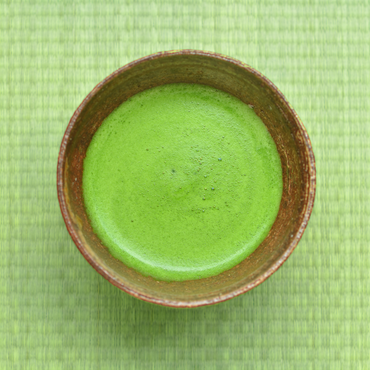

Classic Uji Sakura matcha tea ⋅ Yamamasa Koyamaen ⋅ 30g
Regular price 19.00 €Promotional price 19.00 € Regular priceUnit price 633.33 € by kg

Kaede classic matcha tea from Uji, Kyoto ⋅ Yamamasa Koyamaen ⋅ 100g
Regular price 34.00 €Promotional price 34.00 € Regular priceUnit price 340.00 € by kg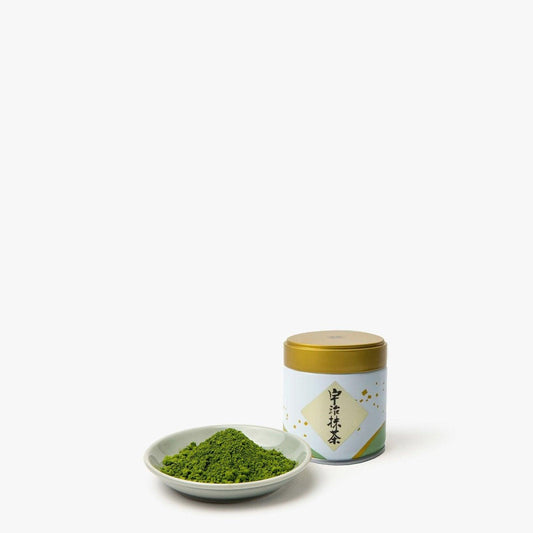

Uji matcha tea ⋅ Yamashiro ⋅ 40g
Regular price 18.30 €Promotional price 18.30 € Regular priceUnit price 457.50 € by kg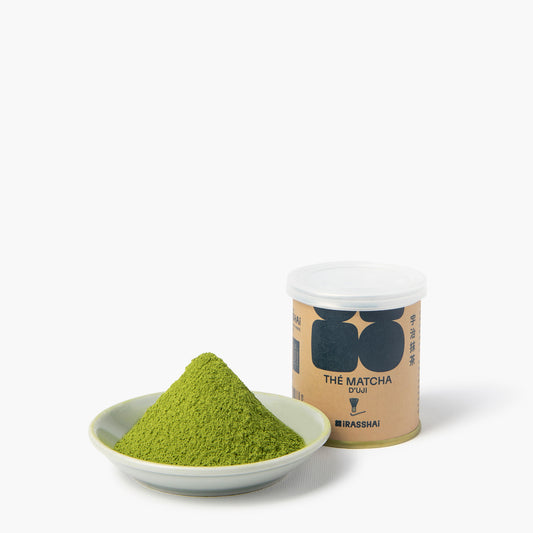
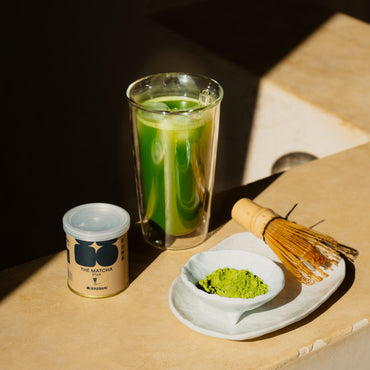
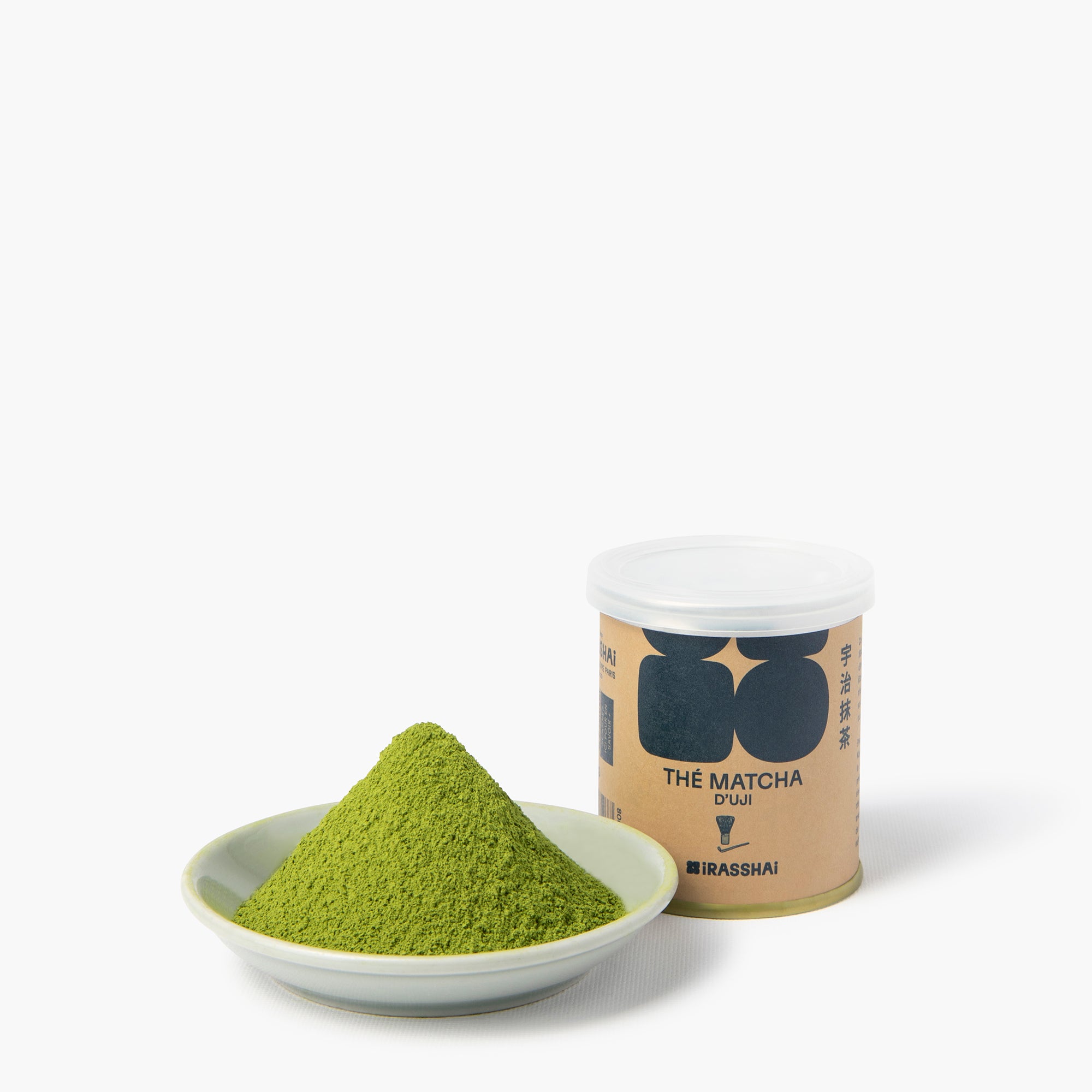
Uji matcha tea ⋅ Yamamasa Koyamaen for iRASSHAi ⋅ 30g
Regular price 16.50 €Promotional price 16.50 € Regular priceUnit price 550.00 € by kg


Our producers

Yamamasa Koyamaen
Yamamasa Koyamaen is a prestigious Japanese tea brand, particularly renowned for the exceptional quality of its matcha. Founded in 1704 in Uji, near Kyoto, Koyamaen has more than 300 years of expertise in green tea production, making it one of the oldest and most respected tea producers in Japan.

Rokubei Tea
Founded in 1818 in Kyoto, Rokubei tea is a tea house with nearly 200 years of history. This historic house stands out for its philosophy of creating high-quality teas, ranging from blends to single-producer and organic teas, while committing to offering environmentally friendly products. With an approach inspired by the world of wine, the company highlights the richness of terroir teas, revealing the diversity of flavors across plots and producers.
FAQ
Can you drink matcha every day?
Yes, you can drink matcha every day. It is rich in antioxidants, amino acids such as L-theanine, and vitamins. However, because of its caffeine content, it is advisable to limit how much you consume to avoid effects such as insomnia or nervousness. In general, 1 to 2 cups a day is a reasonable amount.
What is the ideal water temperature for preparing matcha?
L’water used to prepare matcha should be heated to around 70-80°C. Water that is too hot can burn the matcha, giving it a bitter taste and degrading its antioxidant properties.
Does matcha contain caffeine?
Yes, matcha contains caffeine, but the presence of L-theanine in matcha softens its stimulating effects, providing gentler, longer-lasting energy without the peaks and crashes often associated with coffee. A serving of matcha contains about 30 to 70 mg of caffeine, less than a cup of coffee but more than a cup of regular green tea.
What are the different grades of matcha, and how do they differ?
Matcha is classified into several grades according to its quality:
- Ceremonial grade: Used in tea ceremonies, it is the highest quality, with a mild flavor, a bright green color, and no bitterness.
- Premium grade: Ideal for everyday consumption, it offers a good balance between sweetness and bitterness, with a bright green color, though slightly less intense than ceremonial grade.
- Culinary grade: Used for cooking, this matcha has a stronger and sometimes more bitter taste, with a less vibrant green color. It is perfect for smoothies, pastries, and other preparations.


