

Japanese cuisine is renowned for its subtlety, precision, and attention to every detail. Behind this rigor lies a range of traditional utensils designed to enhance the chef’s techniques and the flavor of the food. From knives as sharp as swords to ceramic graters, discover the main Japanese utensils and their essential role in Japanese culinary art.
Table of Contents
- Japanese knives (包丁・Hōchō)
- The Japanese mortar (すり鉢・Suribachi)
- The Japanese grater (おろし金・Oroshigane)
- The rice cooker (Suihanki)
- The tamagoyaki pan (卵焼き器)
- The makisu (巻き簾)
- The donabe (earthenware pot)
- The steamer basket (蒸籠・Seiro)
- Cooking chopsticks (菜箸・Saibashi)
- Additional utensils
- Why choose Japanese kitchenware?
1. Japanese knives (包丁・Hōchō)
At the heart of Japanese culinary art, Japanese knives embody centuries-old craftsmanship inherited from the forging of samurai swords. Hand-forged by master cutlers, these exceptional tools combine precision, beauty, and efficiency. Each knife is designed for a specific function, reflecting the attention paid to every movement in the kitchen.
Santoku (三徳包丁): nicknamed the "three virtues" for its ability to slice meat, fish, and vegetables, it is the ultimate all-purpose knife in Japanese households
.Gyuto (牛刀): the Japanese equivalent of the Western chef's knife, it features a thinner blade and a nimble handle, making it ideal for precise cuts
.Yanagiba (柳刃包丁): Featuring a long, thin blade sharpened on one side, it is designed to slice raw fish into clean, even slices without crushing it—an essential tool for sushi and sashimi
.Deba (出刃包丁): Sturdy and thick, this knife is perfect for filleting fish or cutting through small bones and carcasses
.- Nakiri (菜切り包丁): With its straight, rectangular blade, it excels at precisely slicing vegetables into thin, even slices.
Japanese blades are often made of carbon steel or Damascus steel, renowned for their hardness and exceptional sharpness. The asymmetrical sharpening, typical of traditional knives, allows for an ultra-precise, almost surgical cut, but requires rigorous maintenance. These tools are not mere utensils: they embody a relationship with the gesture, the material, and time—at the heart of Japanese cuisine.
2. The Japanese mortar (すり鉢・Suribachi)
The suribachi is a Japanese ceramic mortar, instantly recognizable by its spiral-grooved interior walls. These grooves make it easier to grind ingredients by gently catching them as pressure is applied by the surikogi (the accompanying wooden pestle). Less harsh than a stone mortar, this set allows for fine grinding without heating or altering the flavors.
Traditionally used to grind sesame seeds (goma) into a paste, it is also used to mash tofu and boiled vegetables, or to prepare thick sauces such as goma-dare (sesame sauce for shabu-shabu or salads). In home kitchens as well as in kaiseki cuisine, the suribachi embodies this gentle and respectful approach to ingredients, typical of Japanese cooking.


Jukusa Katakuchi Mortar -€8€ Wooden Mortar Pestle - €8.50
3. The Japanese grater (Oroshigane)
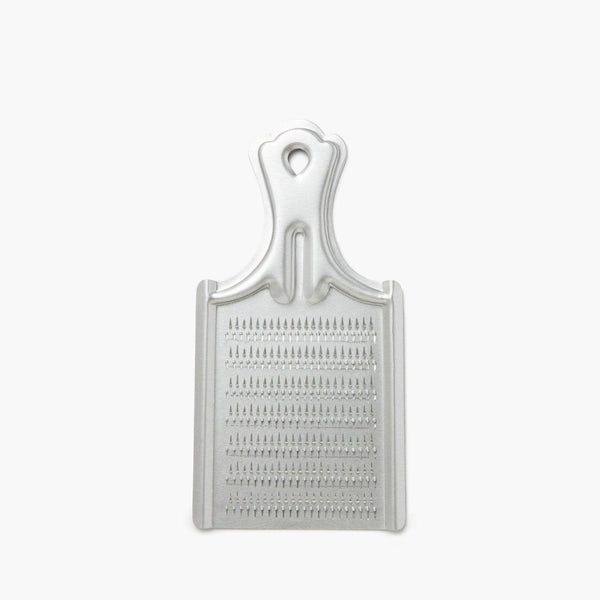
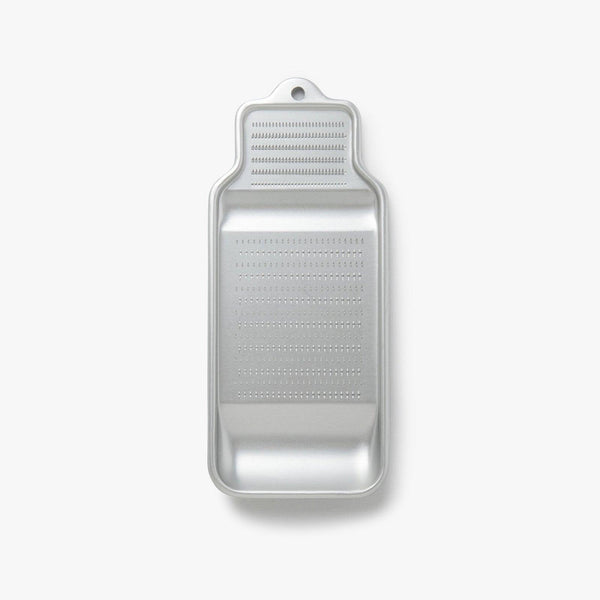
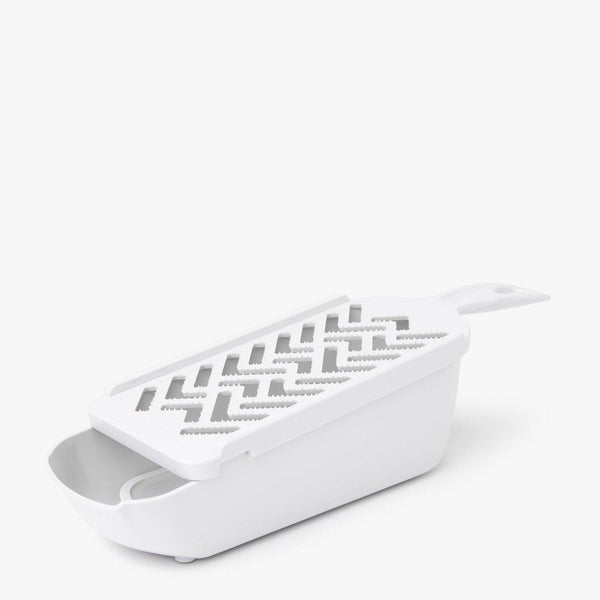
The oroshigane is a fine grater, used primarily for grating daikon radish, ginger, or wasabi. Traditionally made of copper, it features a very fine grating surface that produces a paste-like texture ideal for sauces or condiments. Ceramic versions are also available and are more common in households.

Grater with aluminum handle - $3.90€
4. The rice cooker (Suihanki)
An everyday essential, the suihanki ensures perfectly cooked Japanese rice: tender, fluffy, and slightly sticky. It offers several settings depending on the type of rice—white, brown, sushi, or porridge—and automatically adjusts the temperature and cooking time. High-end models, whether induction-powered or featuring earthenware pots, replicate traditional wood-fired cooking for a deeper, more authentic flavor. Compact and convenient, it saves time while preserving the quality of rice, the staple of Japanese cuisine.
5. The tamagoyaki pan (卵焼き器)
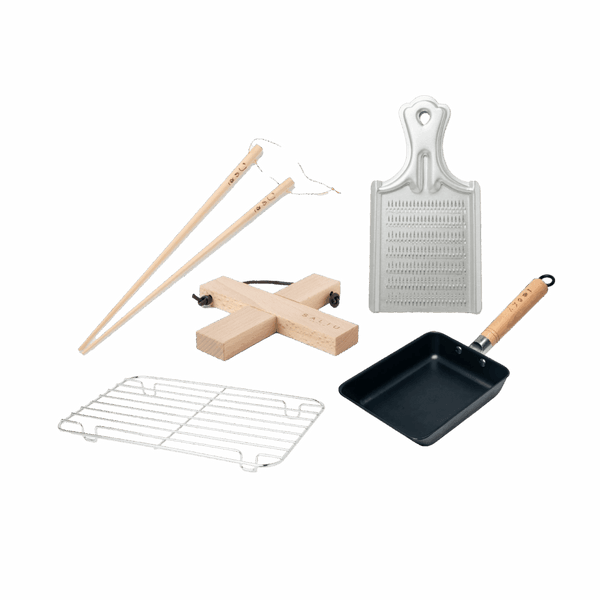
This small rectangular pan is used to cook Japanese omelets in successive layers, rolled one on top of the other. There are versions adapted to different regions of Japan: square-shaped for the Kanto region, and elongated rectangular for the Kansai region. Tamagoyaki is a classic staple of bento boxes, breakfasts, and sushi platters.

6. The makisu (巻き簾)
A makisu is a woven bamboo mat used to roll maki sushi. It applies gentle, even pressure, resulting in a tightly rolled shape. It is also used to shape certain dishes, such as rolled omelets or vegetable rolls.

7. The donabe (earthenware pot)
The donabe is a Japanese earthenware pot that has been used since the Edo period for slow-cooked dishes and communal meals. Its thick, slightly porous structure allows for slow and even heat distribution. Placed directly over a gas flame, it gradually absorbs heat and then releases it steadily, allowing ingredients to cook gently without altering their textures or flavors.
The donabe is particularly popular for nabe (Japanese hot pots), okayu (rice porridge), soups, and slow-cooked dishes featuring vegetables, meat, or fish. Thanks to its ability to retain heat, it’s perfect for placing in the center of the table: the dish stays warm throughout the meal, fostering a warm, shared dining experience.
Some models are specifically designed for cooking rice, featuring a rounded shape and a thick lid that mimics the effect of a pressure cooker, creating gentle internal pressure for fluffy, flavorful results.
Each donabe is a one-of-a-kind piece, often handmade with traditional designs.
9. Cooking chopsticks (菜箸・Saibashi)
Longer than traditional chopsticks (up to 30 cm), saibashi are designed for handling hot food while cooking, flipping tempura, beating eggs, or mixing noodles. Their light weight makes them ideal for precise use.

Bamboo cooking chopsticks - $5.50€
10. Additional utensils
Beyond the classic dishes, Japanese cuisine relies on a wide variety of small, specialized utensils—often unassuming but essential for performing the precise techniques of this culinary tradition.
Shamoji (しゃもじ): a flat wooden or plastic spatula used to mix or serve rice without crushing it. Its slightly curved surface allows for gentle handling of the grains while preventing them from sticking together. Essential for serving hot rice or mixing sushi rice
.

Otoshibuta (落し蓋): a small floating lid, usually made of wood or stainless steel, that is placed directly on top of the food in a pot. It keeps the ingredients submerged in the broth, promotes even cooking, and reduces evaporation, making it ideal for simmered dishes such as nimono
.Hangiri (飯切り): a large, round wooden bowl (often made of cypress), used to season sushi rice. The wood absorbs excess moisture during the mixing process with vinegar, resulting in shiny, fluffy, and well-balanced rice. It is traditionally used with a fan (uchiwa) to cool the rice
.Urokotori: a small metal scraper designed to easily remove fish scales. Its serrated surface allows for effective cleaning without damaging the flesh, making it an indispensable tool for preparing fish in both everyday cooking and haute cuisine.
Why choose Japanese kitchenware?
Using Japanese kitchen tools is like stepping into a whole new way of cooking:
Precise techniques to showcase the product.
A minimalist aesthetic, in keeping with the wabi-sabi philosophy.
A more intuitive approach to time and cooking.
High-quality materials (wood, bamboo, copper, terracotta) that are durable and often handmade.
They are perfect for both curious beginners and food enthusiasts looking to take their skills to the next level.