



Collection: Miso pasta
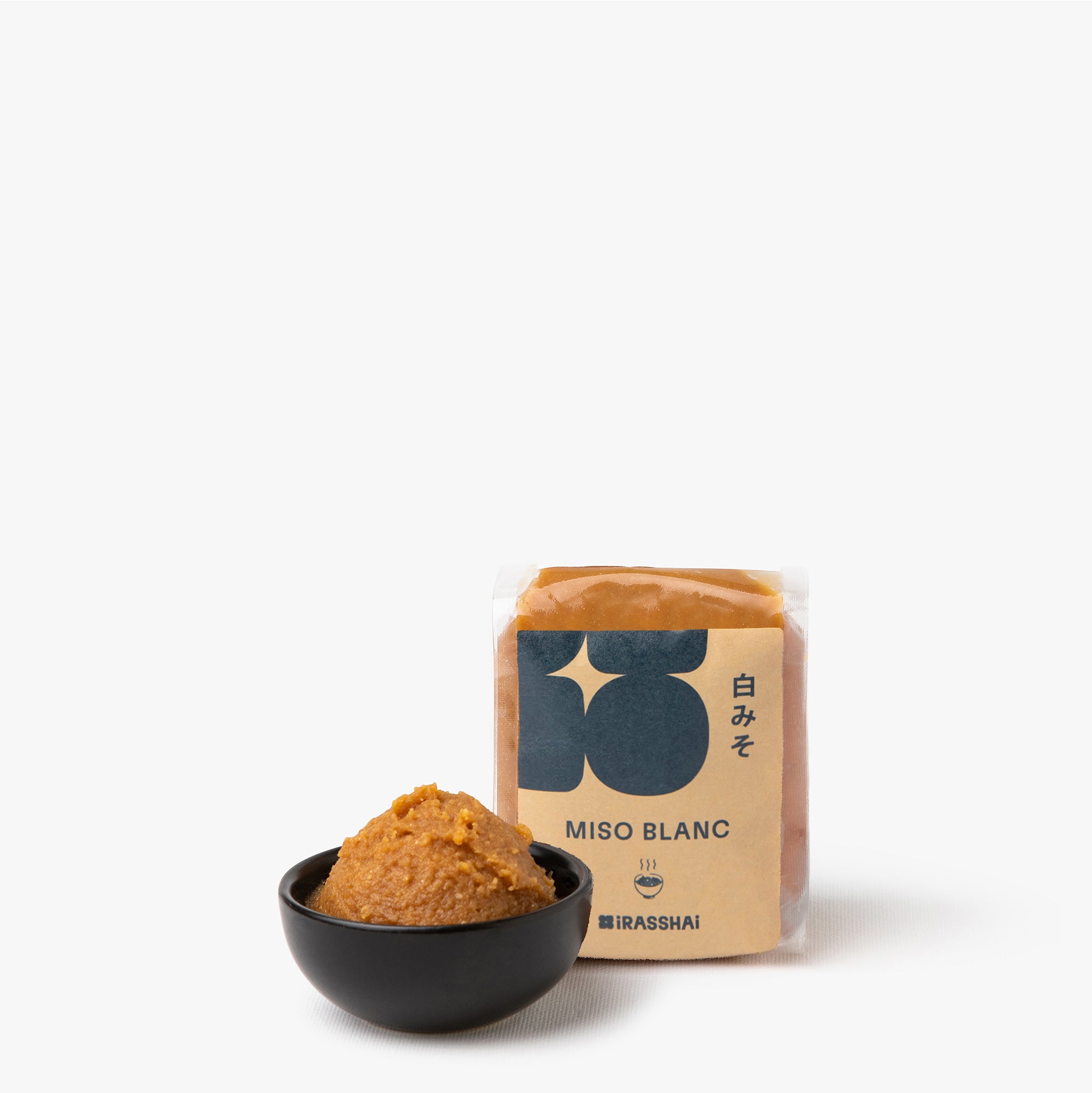
The miso (pronounce misso) is a traditional Japanese fermented paste made from soy, rice or barley beans, salt and a ferment called koji. There are several varieties, with a soft or intense taste depending on the duration of fermentation. This step varies from two weeks to several years. Miso dough is an ally to be healthy thanks to its high protein, vitamins, mineral and enzymes content.


-


Black Miso ⋅ Maruya Hatcho Miso ⋅ 300g
⋅ Gluten-free⋅ Rich in flavor and protein⋅ For sauces, soups, and broths⋅ Aged in cedar barrels⋅ Artisanal productionAn additive-free, gluten-free miso made with only soybeans and...
Usual price 8.75 €Promotional price 8.75 € Usual priceUnit price 29.17 € by kg


Our favorite recipes based on miso


Learn more about miso
How is Miso dough made?
Miso dough is a traditional Japanese ingredient made from fermented soybeans.
Ingredients preparation :
Soy: soybeans are cleaned and soaked in water for several hours, usually one night.
Kōji: rice, barley or soy inoculated with the Aspergillus Oryzae mushroom, essential for fermentation.
Cooking soybeans :
The soy soybeans are steamed or boiled until they become tender.
Mix with the Kōji :
The cooked soybean is cooled and then mixed with kōji and salt. Salt controls fermentation and prevents the growth of unwanted bacteria.
Fermentation :
The mixture is placed in barrels or tanks for fermentation. The duration varies from a few months to several years depending on the type of miso desired.
Maturation :
During fermentation, miso develops its characteristic flavors. The temperature and humidity conditions are carefully controlled.
Refining :
After the period of fermentation, miso is often refined to allow flavors to develop even more.
Packaging :
The mature miso is packed and ready to be used. The dough can be more or less smooth, and its color can vary from white to dark red, including brown tones.
What are the different types of miso?
Shiro miso (white miso): Short fermentation, mild taste. Perfect for light soups and dressings.
Aka miso (red miso): Longer fermentation, stronger and saltier taste. Ideal for rich dishes and robust sauces.
Mixed miso (awase miso): Blend of white and red miso, offering a balanced flavor.
Mugi Miso (barley miso): Mild flavor with barley notes. Used for soups and marinades.
Kome Miso (rice miso): Made from soy and rice, with slower fermentation, offering a range of flavors from mild to saltier.
Shinshu Miso (yellow miso): A miso with an intermediate taste, between white and red miso, very versatile for all kinds of dishes.
Tofu Miso: Mild and creamy, often used in vegetarian sauces or light dishes.
How is Miso dough used in Japanese cuisine used?
Miso soup :
Traditional soup made with dissolved miso in dashi (fish broth) and often embellished with tofu, wakame algae and vegetables.
Sauces and marinades :
Used as a base for thick sauces or marinades for meats, fish and vegetables, often combined with mirin, sake, and sugar.
Ramen :
Bouillon base for ramen, adding a depth of Umami flavor.
Nabemono (simmered dishes) :
Key ingredient in simmered dishes like the "Miso Nabe", where the miso is dissolved in the broth to enrich the flavor of the dish.
Dengaku :
Sweet sauce applied to grilled eggplant, tofu or other vegetables before grilling them.
Yaki :
A mixture of miso, sake, sugar and other ingredients, toasted on a stick or a spatula.
Tsukemono (Pickles) :
Used to marinate vegetables to create tasty pickles.
Vegetable seasoning :
Mixed with dressings or used as a dip for raw vegetables.
Desserts and pastries :
Integrated into sweet recipes, such as cookies or cakes, to add a salty and umami note.
How should miso be stored to keep it fresh?
Refrigeration: Once opened, miso should always be kept in the refrigerator. It is best to store it in an airtight container to prevent odor absorption and preserve its flavors.
Avoid moisture: Make sure the spoon or utensils used to serve the miso are dry. Moisture can accelerate fermentation and alter the quality of the miso.
Do not let air in: Keep the miso well covered and try to minimize its exposure to air. You can also place plastic wrap directly on the surface of the miso before closing the container to prevent oxidation.
Use quickly: Although miso can last several months in the refrigerator, it is best to use it within 3 to 6 months after opening to enjoy its full freshness.
Freezing (optional): If you do not use all the miso quickly, you can also freeze it. Simply divide it into small portions and store it in a freezer bag or airtight container. Once frozen, it keeps for several months.
How to cook with miso daily and in ways other than miso soup?
- As a marinade for your meats and fish: Mix white miso (Shiro Miso) with a bit of honey and ginger to glaze a salmon fillet or chicken breasts.
- In your salad dressings and vinaigrettes: A teaspoon of miso diluted in sesame oil and rice vinegar transforms a simple green salad into a gourmet dish.
- To enhance your starches: Add a dollop of miso to the cooking water of your pasta, or mix it directly into mashed potatoes for a creamy, savory touch without excess butter.
- In a sweet version (the Japanese "Salted Caramel"): Miso pairs wonderfully with dark chocolate or in salted butter caramel for your cookies and brownies.
Why is miso the best alternative to salt?
Table salt provides sodium but little flavor complexity. Miso, on the other hand, offers a complete sensory experience thanks to natural fermentation. Using miso to season your dishes allows you to reduce your sodium chloride intake while enhancing the aromatic complexity of your recipes.
By weight, miso contains about 30% to 50% less sodium than regular table salt. But that's not all:
- Natural probiotics: Unlike salt, miso is a living food that supports digestion.
- Rich in amino acids: It provides plant-based proteins from soy or barley.
- Low glycemic index: Perfect for balanced cooking.
What are the benefits of miso?
Miso is much more than a condiment: it is a "superfood" rooted in a millennia-old tradition. Its slow fermentation transforms simple ingredients into a nutritional goldmine.
- Ally of your microbiota (Digestion): As an unpasteurized fermented food, miso is rich in probiotics (strains of Aspergillus oryzae). It strengthens the intestinal flora and aids digestion.
- Immune system booster: Regular consumption helps reinforce the body's natural barriers thanks to its richness in active enzymes.
- Source of complete plant-based proteins: Made from soy, it contains all essential amino acids, making it indispensable for vegetarian and vegan diets.
- Powerful antioxidant: The fermentation process produces antioxidants that fight cellular aging and oxidative stress.
- Rich in minerals: It provides zinc, manganese, and copper, essential for proper metabolic function.


