




Collection: seaweeds
Japan is a country that faces the sea, and this is reflected in its cuisine! Along with fish, seaweeds at the heart of Japanese cuisine and adds great richness to dishes thanks to the many edible varieties that exist. It is most often found dried or grilled, in the form of sheets or strips. In addition to being very tasty, it is rich in antioxidants, vitamins, and iodine, and promotes cardiovascular health.


-


Grilled nori seaweed 10 leaves ⋅ Kobayashi Noriten ⋅ 30g
Essential for preparing sushi or maki rolls. Crispy texture and slightly salty umami flavor. Can also be incorporated into noodle dishes, salads, and other dishes.
Regular price 8.30 €Prix promotionnel 8.30 € Regular pricePrice per unit 276.67 € per kg -


Sliced nori seaweed ⋅ Wataya ⋅ 15g
⋅ Light texture and umami taste⋅ Ideal for enhancing miso soups and salads⋅ Essential for preparing your ochazuke⋅ Perfect for garnishing your preparationsThe kizami...
Regular price 6.75 €Prix promotionnel 6.75 € Regular pricePrice per unit 450.00 € per kg -


Roasted and salted nori seaweed snacks 60 sheets ⋅ Wataya ⋅ 23g
⋅ Rich in minerals and calcium⋅ Handcrafted⋅ Ideal for making sushi or maki⋅ Perfect for replacing chips⋅ Salty and umami taste,...
Regular price 9.50 €Prix promotionnel 9.50 € Regular pricePrice per unit 413.04 € per kg -


Ariake nori seaweed in strips ⋅ Ariake Nori Labo ⋅ 20g
⋅ Harvested from the Ariake⋅ Sea⋅ Easy to incorporate into your salads, soups and broths⋅ Rich in minerals⋅ Handcrafted⋅ Premium⋅ Exclusive to iRASSHAiIdeal for adding a...
Regular price 11.80 €Prix promotionnel 11.80 € Regular pricePrice per unit 590.00 € per kg -
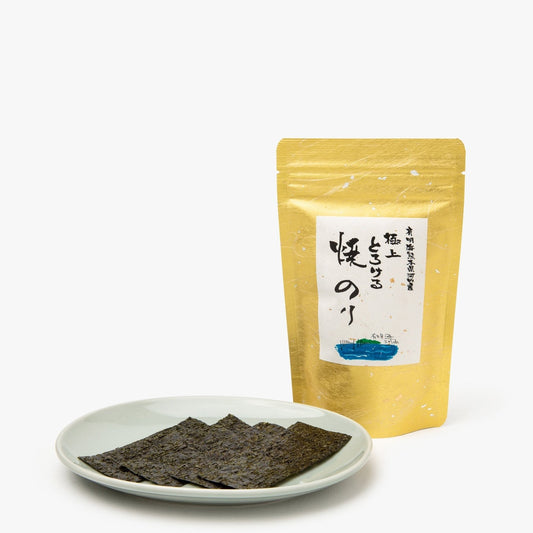
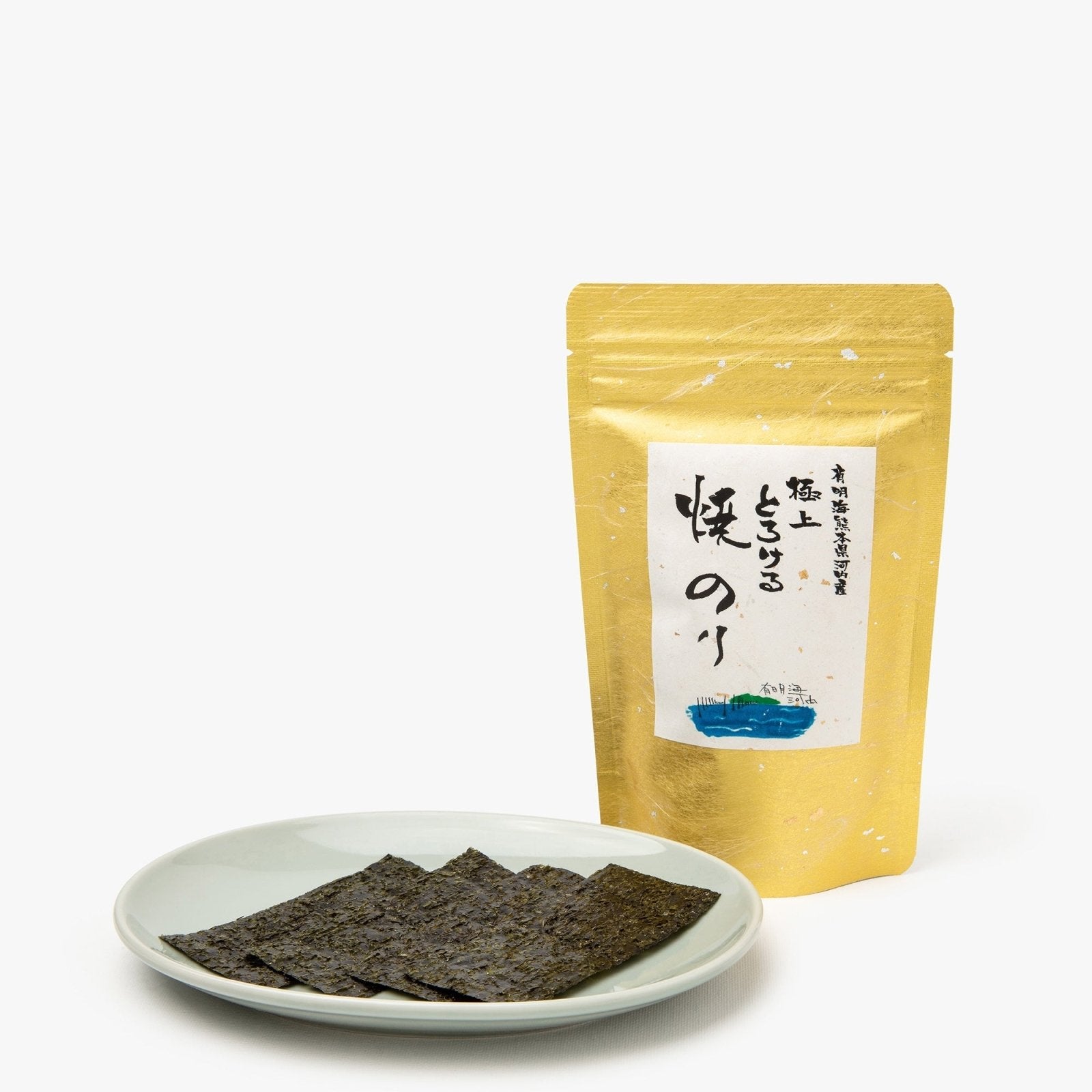
Roasted nori seaweed leaves ⋅ Ariake Nori Labo ⋅ 44g
⋅ Harvested from the Ariake⋅ Sea⋅ Stir into hot soups⋅ Or enjoy in sushi or maki⋅ Rich in minerals⋅ Handcrafted⋅ Premium⋅ Exclusive...
Regular price 12.90 €Prix promotionnel 12.90 € Regular pricePrice per unit 293.18 € per kg -


Roasted nori seaweed halves 20 sheets ⋅ Kobayashi Noriten ⋅ 30g
⋅ seaweeds selected for making maki and temaki⋅ Handcrafted⋅ Can also be used in ramen, on rice, or enjoyed as is...
Regular price 9.30 €Prix promotionnel 9.30 € Regular pricePrice per unit 310.00 € per kg -


Grilled and salted seaweeds ⋅ Wataya ⋅ 12g
⋅ seaweeds Rich in minerals⋅ Crispy texture⋅ Iodine and umami flavor⋅ Perfect for preparing bento boxes, sushi, or maki rollsThis seaweed is...
Regular price 7.90 €Prix promotionnel 7.90 € Regular pricePrice per unit 658.33 € per kg -


Grilled nori seaweed from Ariake premium ⋅ Ariake Nori Labo ⋅ 80g
⋅ Premium quality seaweeds Harvested from the Ariake Sea⋅ For making sushi or maki⋅ Perfect with rice⋅ Handcrafted⋅ Premium⋅...
Regular price 14.50 €Prix promotionnel 14.50 € Regular pricePrice per unit 181.25 € per kg


Our favorite seaweed recipes
-
Wakame seaweed salad recipe
see the recipe
-
Salted waffles with wakame recipe
see the recipe
-
Cucumber and seaweeds Sunomono Recipe
see the recipe


Learn more about seaweeds
What are the different types ofseaweeds in Japanese cuisine?
The main types ofseaweeds used in cooking are:
- Nori: Used to wrap maki and onigiri.
- Wakame: Often added to soups, particularly miso soup.
- Kombu: Key ingredient in the preparation of dashi broth.
- Hijiki: seaweeds used in salads or as a side dish.
- Aramé: Another black seaweed, often used in simmered dishes.
What are the seaweeds benefits of seaweeds ?
Seaweeds seaweeds are rich in minerals such as calcium, magnesium, and iodine, which are essential for thyroid health. They also contain vitamins A, C, E, and K, as well as antioxidants that help protect cells from damage. In addition, seaweeds a good source of fiber and have anti-inflammatory properties.
What's the difference between nori and wakame?
Nori is a thin, dried seaweed, often used to wrap sushi and maki, while wakame is a thicker seaweed, often used in soups, such as miso soup. Nori has a crunchier texture and a slightly salty taste, while wakame is softer and has a mild marine flavor.
How to use seaweeds in cooking?
Kombu is mainly used to prepare dashia basic stock for many Japanese soups. It can also be cut into thin strips and added to stews, or used to make tsukudani, a kind of sweet and sour condiment. To prepare dashi, kombu is usually infused in hot water, then removed before boiling.
Which seaweeds are seaweeds suited for making maki?
Nori is the seaweed most commonly used to make maki. It is dried and pressed into thin sheets, ideal for wrapping rice and other ingredients in maki and sushi. Nori is characterized by its crunchy texture and slightly salty flavor.
How to rehydrate seaweeds ?
To rehydrate seaweeds , place it in a bowl of cold water for 5 to 10 minutes, until it regains its original texture. Some seaweeds, such as kombu, can be added directly to hot broth to rehydrate them while infusing the broth with flavor. Once rehydrated, seaweeds be drained before use.
What are the most popular recipes usingseaweeds
Recipes popular recipes popular recipes usingseaweeds :
- Miso soup: Often prepared with wakame.
- Wakame salad: with sesame vinaigrette.
- Onigiri: Rice balls wrapped in nori.
- Dashi: Kombu-based broth.
- Hijiki no nimono: Simmered dish of hijiki with carrots and tofu.
Which seaweeds used for sushi?
The main seaweed used for sushi is nori (Porphyra), a red seaweed that turns green or black after drying and roasting. Here are the different typesseaweeds in sushi cooking:
- Nori (海苔): The essential seaweed for maki, temaki and sometimes for wrapping onigiri. It is sold in dried and roasted leaves, with different qualities (gold, silver, bronze).
- Kombu (昆布): This seaweed is used to flavor shari (sushi rice) by being infused in rice vinegar or dashi broth.
- Wakame (わかめ): Although rarely used directly in sushi, it often accompanies sushi dishes in the form of aseaweeds salad.
- Hijiki (ひじき): More commonly used in side dishes than sushi, it can be added to certain garnishes.


