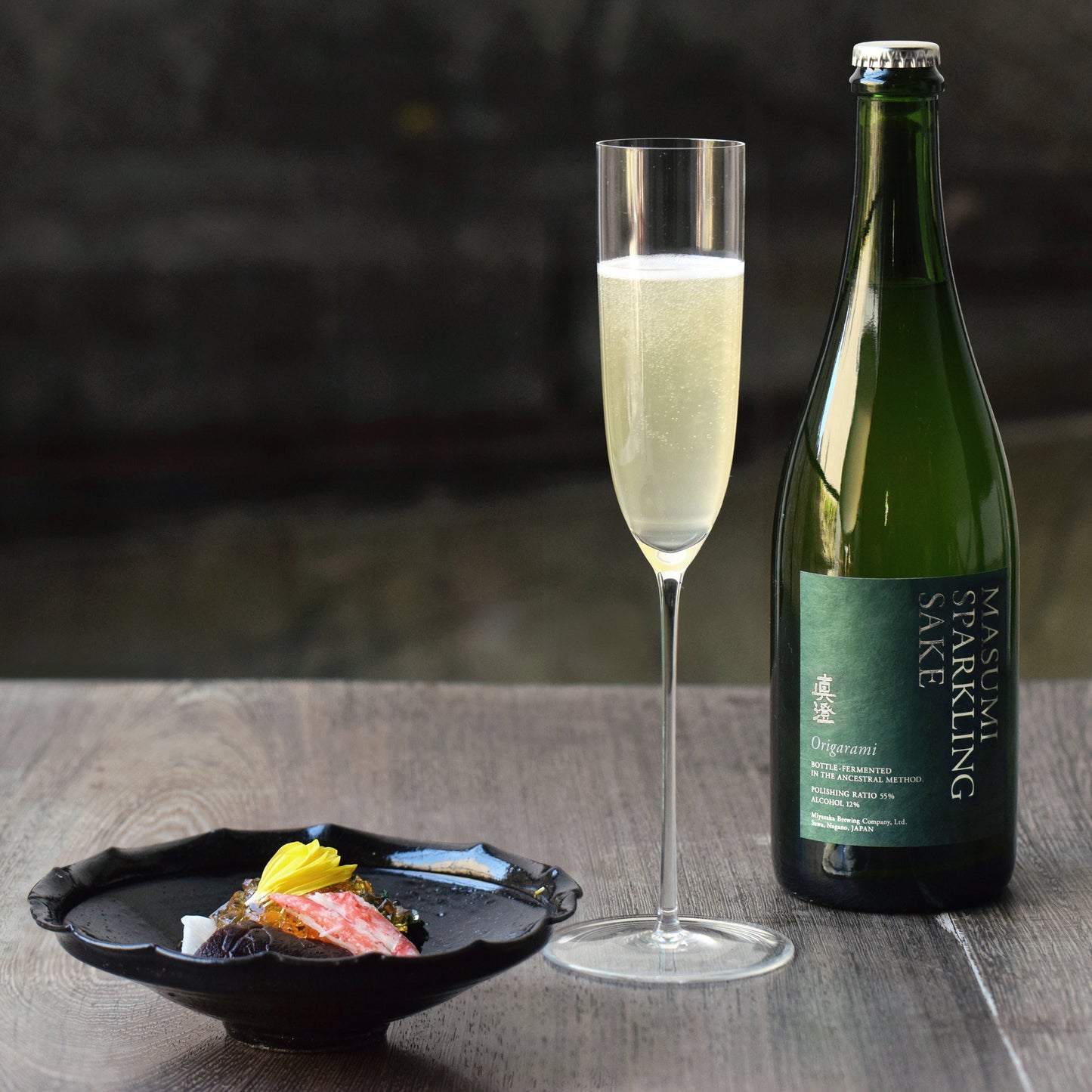
Saké Masumi Sparkling Origarami Junmai ginjo ⋅ MASUMI ⋅ 720ml
Modern sake - sparkling
Vendor : MASUMI
Regular price
52.00 €
Prix promotionnel
52.00 €
Regular price
Price per unit
72.22 €
per
l
out of stock
ALL TAXES INCLUDED.
Shipping costs calculated at checkout.
⋅ Refreshing sparkling sake
⋅ Naturally fruity fragrance
⋅ Pair with any fresh or tangy dish
⋅ Alternative to prosecco
⋅ Can be used in cocktails for an effervescent look
Effervescent sake with moderate acidity and controlled sweetness. Its appearance is a pale lemon yellow, slightly veiled, with a fine, persistent mousse. The nose is dominated by fruit aromas such as green apple and pear, accompanied by notes of white flowers and a touch of sour cream that adds a light acidity. On the palate, the effervescence is pronounced, balancing sweetness with a slightly dry finish. This sake goes particularly well with fresh, slightly acidic dishes. It accompanies sushi such as kohada, as well as seafood-based starters, including marinades, vinegar dishes and shrimp cocktails. It can also be enjoyed with foods with buttery notes, such as brioche or French toast, making it a suitable option for brunches. Profile: Nose: Lactic, white flower, fresh, light, fairly lively. Palate: Fine bubbles, saline, fresh, a hint of acidity. Finish: Long and lively, reminiscent of a blanc de blancs champagne. Goes well with: Mochi to cook with brown rice and mugwort
Alcohol abuse is dangerous for your health, consume in moderation. Ordering alcohol is reserved for people of legal age, in accordance with the legislation in force in your country.
⋅ Naturally fruity fragrance
⋅ Pair with any fresh or tangy dish
⋅ Alternative to prosecco
⋅ Can be used in cocktails for an effervescent look
Effervescent sake with moderate acidity and controlled sweetness. Its appearance is a pale lemon yellow, slightly veiled, with a fine, persistent mousse. The nose is dominated by fruit aromas such as green apple and pear, accompanied by notes of white flowers and a touch of sour cream that adds a light acidity. On the palate, the effervescence is pronounced, balancing sweetness with a slightly dry finish. This sake goes particularly well with fresh, slightly acidic dishes. It accompanies sushi such as kohada, as well as seafood-based starters, including marinades, vinegar dishes and shrimp cocktails. It can also be enjoyed with foods with buttery notes, such as brioche or French toast, making it a suitable option for brunches. Profile: Nose: Lactic, white flower, fresh, light, fairly lively. Palate: Fine bubbles, saline, fresh, a hint of acidity. Finish: Long and lively, reminiscent of a blanc de blancs champagne. Goes well with: Mochi to cook with brown rice and mugwort
Alcohol abuse is dangerous for your health, consume in moderation. Ordering alcohol is reserved for people of legal age, in accordance with the legislation in force in your country.
SKU:1011479

Free delivery
Means of payment*from €50 at a relay point in France from €85 home delivery in France from €90 home delivery in Europe