


Collection: Japanese sesame oils
Japanese sesame oil is an essential ingredient for adding authentic flavors to your dishes. Cold-pressed to preserve all the richness of the sesame seeds, this oil stands out for its subtle flavor and silky texture. Ideal for salad dressings, stir-fries, or as a finishing touch on your dishes, it adds a touch of depth and umami, typical of Japanese cuisine.

-
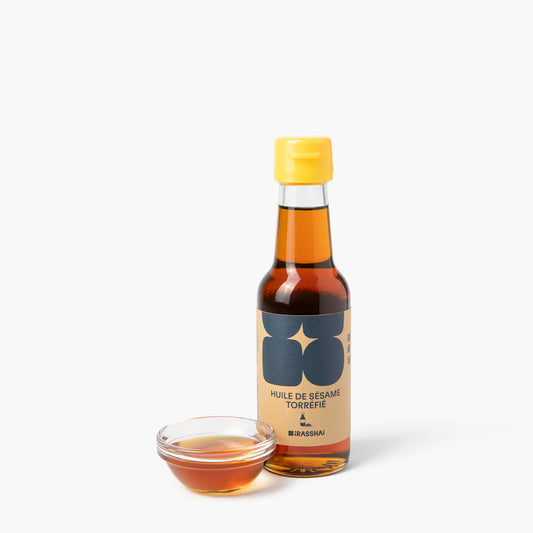

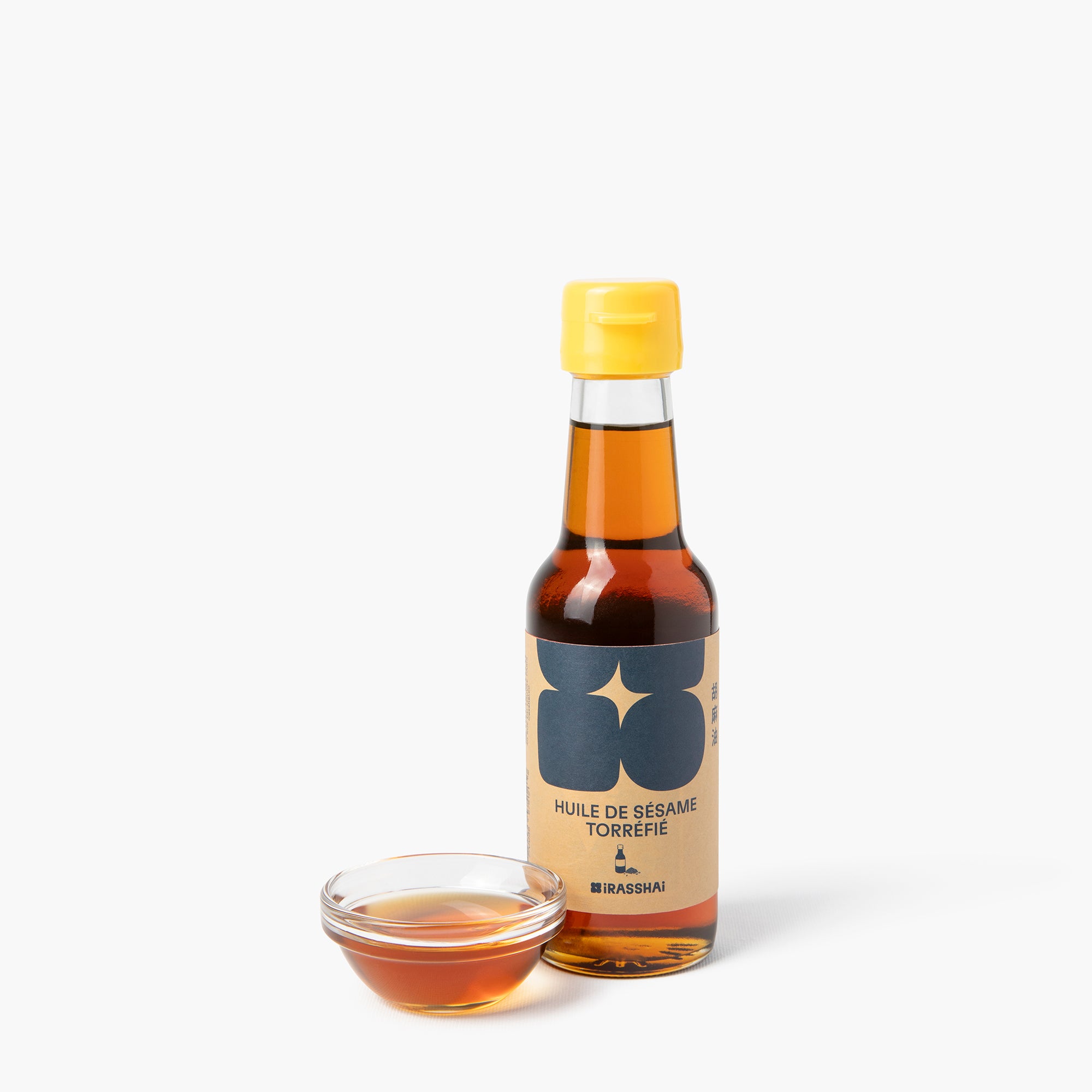
Classic sesame oil ⋅ Iwai no Goma abura for iRASSHAi ⋅ 140g
⋅ Amber color⋅ Rich and aromatic flavor⋅ Perfect for both sweet and savory dishes⋅ For everyday useThis sesame oil has been selected by iRASSHAi to be...
Regular price 7.80 €Promotional price 7.80 € Regular priceUnit price 55.71 € by kg

Spicy ra-yu sesame oil ⋅ Iwai no Goma abura ⋅ 55g
⋅ Sesame oil infused with togarashi chili peppers⋅ Easy to use as a seasoning⋅ Beautiful red color⋅ Golden⋅ Iconic Japanese brand⋅ Great for gyoza, noodles, and...
Regular price 6.30 €Promotional price 6.30 € Regular priceUnit price 114.55 € by kg

Intense sesame oil ⋅ Iwai no Goma abura ⋅ 140g
⋅ Intense sesame oil⋅ A roasted aroma reminiscent of toasted hazelnuts⋅ Rich in antioxidants & essential fatty acids⋅ Iconic Japanese brand⋅ Great for gyoza, noodles, and...
Regular price 8.60 €Promotional price 8.60 € Regular priceUnit price 61.43 € by kg

Intense Sesame Oil ⋅ Kadoya ⋅ 163g
⋅ Cold-pressed from sesame seeds⋅ A versatile oil that’s easy to use for dressing or cooking⋅ Amber color that brings out the natural hues of food⋅...
Regular price 7.00 €Promotional price 7.00 € Regular priceUnit price 42.94 € by kg

Light sesame oil ⋅ Iwai no Goma abura ⋅ 140g
⋅ Light and delicate sesame oil⋅ Cold-pressed sesame seeds⋅ Pleasant aroma of sesame and hazelnut⋅ Iconic Japanese brand⋅ Great for seasoning your Asian dishesSesame oil made...
Regular price 8.60 €Promotional price 8.60 € Regular priceUnit price 61.43 € by kg

Classic sesame oil ⋅ Kadoya ⋅ 200g
⋅ Cold-pressed from unroasted sesame seeds⋅ Rich aroma, slightly roasted flavor⋅ Easy to use in cooking or as a seasoning⋅ Perfect for dressing salads or sautéing...
Regular price 8.20 €Promotional price 8.20 € Regular priceUnit price 41.00 € by kg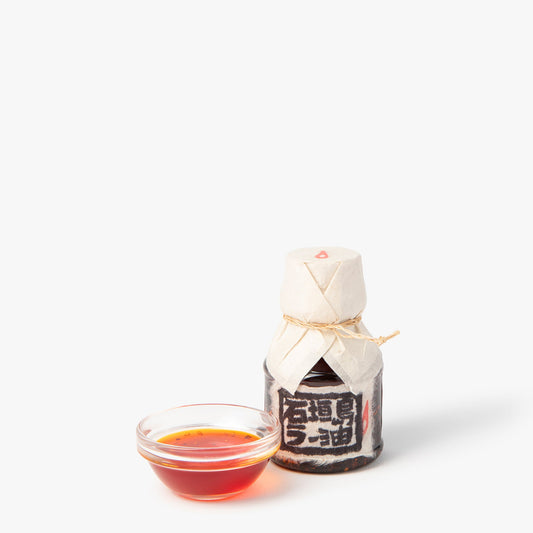

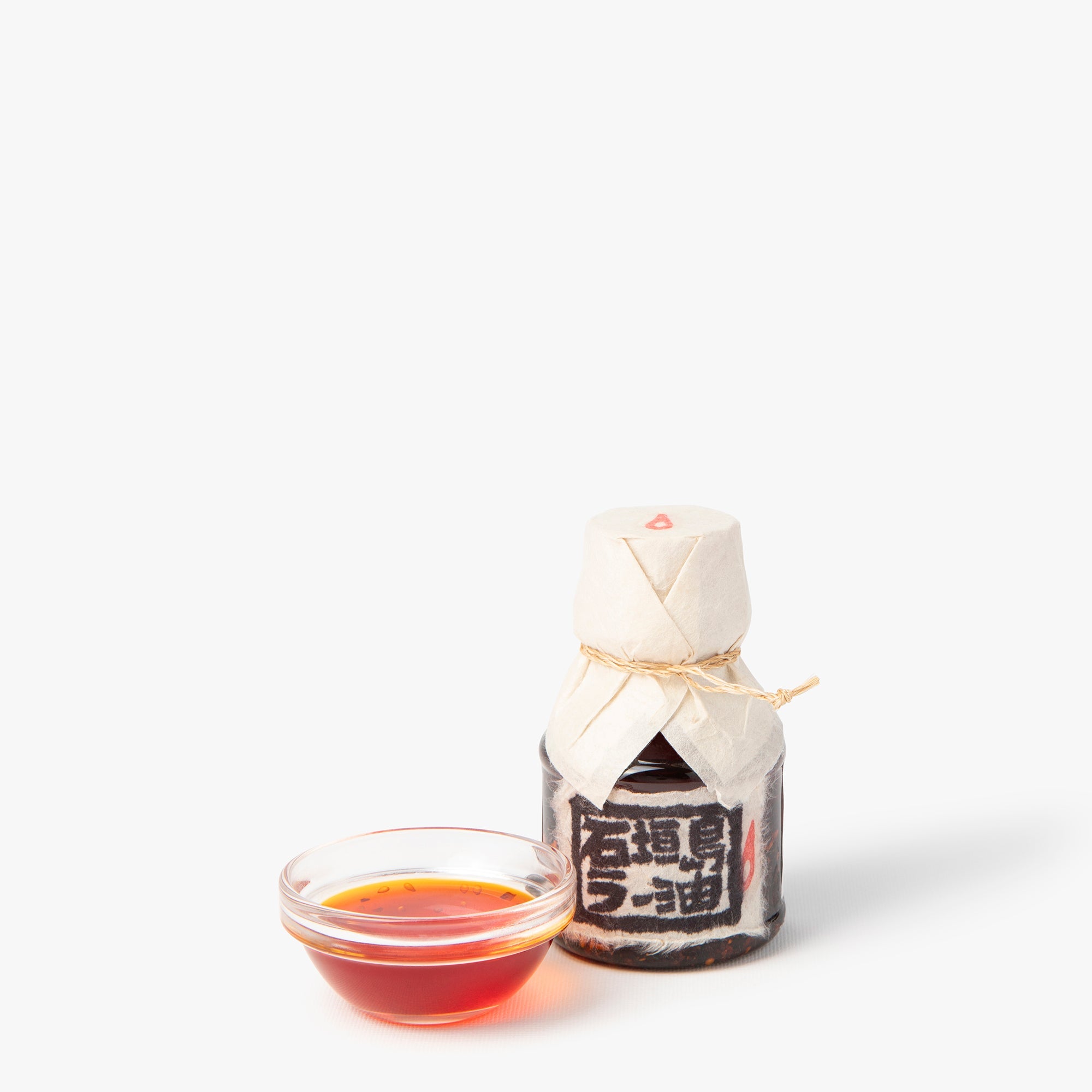
Spicy sesame oil ra-yu ⋅ Pengin Shokudo ⋅ 100g
⋅ Spicy sesame oil⋅ Easy to use as a seasoning⋅ Beautiful red color⋅ Golden⋅ Secret recipe from the traditional Japanese restaurant Pengin Shokudo⋅ Great for gyoza,...
Regular price 12.65 €Promotional price 12.65 € Regular priceUnit price 126.50 € by kg

Intense roasted golden sesame oil ⋅ Henko ⋅ 140g
⋅ The most aromatic of white sesame oils⋅ Ideal for sauces and salad dressings⋅ Perfect for both savory and sweet dishesThe most aromatic of white sesame...
Regular price 14.50 €Promotional price 14.50 € Regular priceUnit price 103.57 € by kg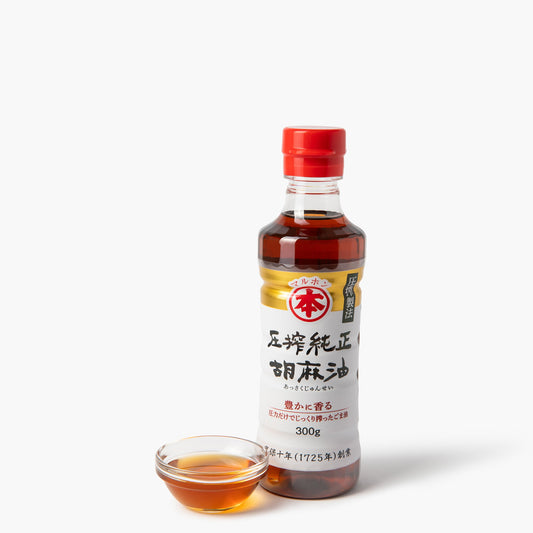
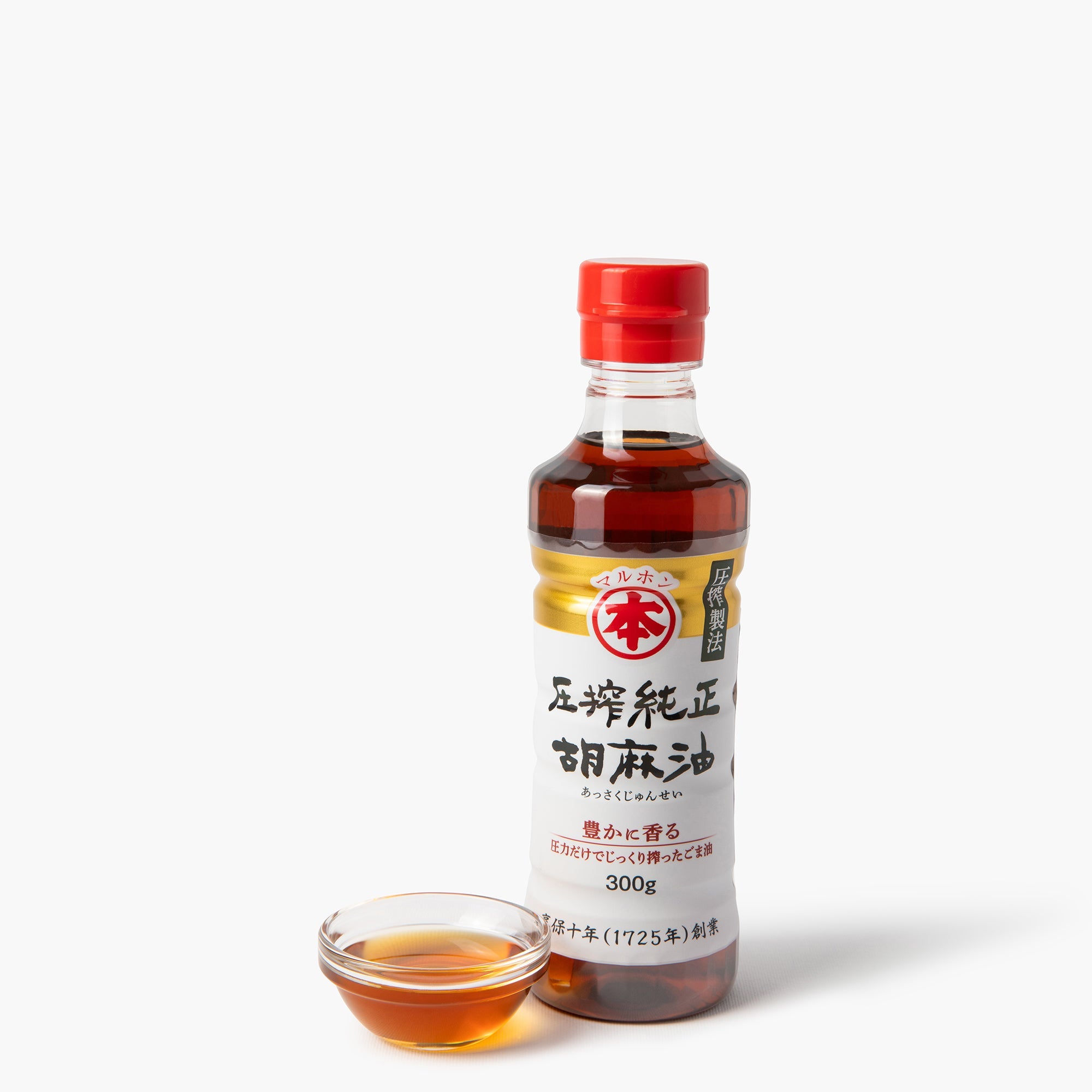
Classic sesame oil ⋅ Maruhon ⋅ 300g
⋅ Cold-pressed from sesame seeds⋅ Artisanal production⋅ Amber color that brings out the natural hues of food⋅ Adds flavor and depth to your dishes⋅ Can be...
Regular price 8.80 €Promotional price 8.80 € Regular priceUnit price 29.33 € by kg

Classic sesame oil ⋅ Kadoya ⋅ 400g
⋅ Cold-pressed from unroasted sesame seeds⋅ Rich aroma, slightly roasted flavor⋅ Easy to use in cooking or as a seasoning⋅ Perfect for dressing salads or sautéing...
Regular price 13.65 €Promotional price 13.65 € Regular priceUnit price 34.13 € by kg

Intense spicy sesame oil ra-yu ⋅ Pengin Shokudo ⋅ 100g
⋅ Very spicy chili sesame oil⋅ Easy to use as a seasoning⋅ Beautiful red color⋅ Golden⋅ Secret recipe from the traditional Japanese restaurant Pengin Shokudo⋅ Great...
Regular price 13.50 €Promotional price 13.50 € Regular priceUnit price 135.00 € by kg

Classic sesame oil ⋅ Iwai no Goma abura ⋅ 330g
⋅ Classic, highly versatile sesame oil⋅ Roasted aroma reminiscent of toasted hazelnuts⋅ Rich in antioxidants & essential fatty acids⋅ Iconic Japanese brand⋅ Great for gyoza, noodles,...
Regular price 15.50 €Promotional price 15.50 € Regular priceUnit price 46.97 € by kg

Intense roasted black sesame oil ⋅ Henko ⋅ 140g
⋅ An intense flavor⋅ Adds body to sauces and salad dressings⋅ Brings out the flavor of spicesA black sesame oil characterized by an intense, toasted flavor...
Regular price 14.50 €Promotional price 14.50 € Regular priceUnit price 103.57 € by kg

Light white sesame oil ⋅ Henko ⋅ 140g
⋅ Rich in flavor⋅ Perfect for sauces and salad dressings.⋅ On fish, tofu, or ice creamThis classic sesame oil is characterized by its rich, roasted flavor...
Regular price 14.50 €Promotional price 14.50 € Regular priceUnit price 103.57 € by kg
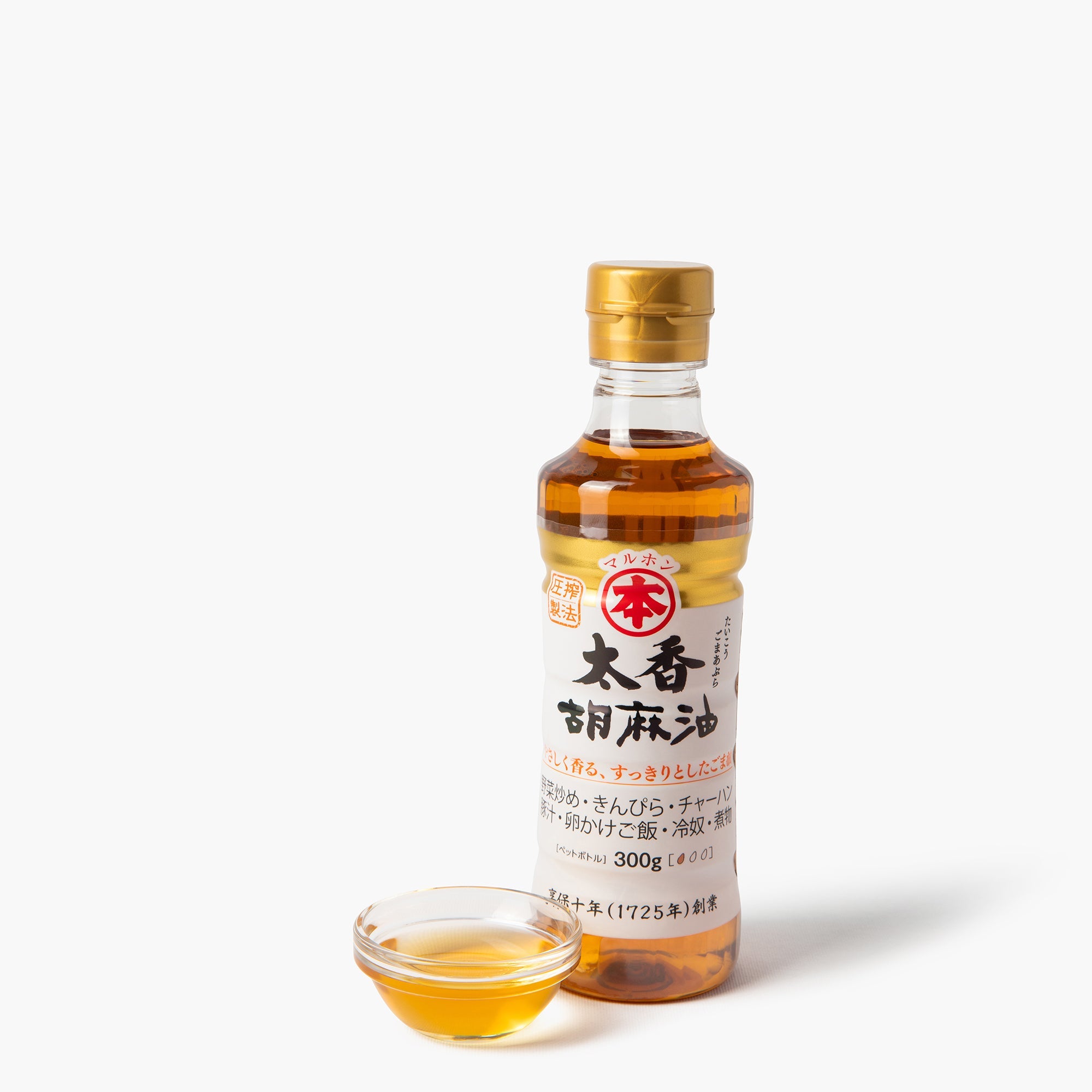
Light sesame oil ⋅ Maruhon ⋅ 300g
⋅ Cold-pressed from sesame seeds⋅ Handcrafted⋅ Amber color that brings out the natural hues of food⋅ Adds flavor and depth without overpowering dishes⋅ A staple of...
Regular price 9.65 €Promotional price 9.65 € Regular priceUnit price 32.17 € by kg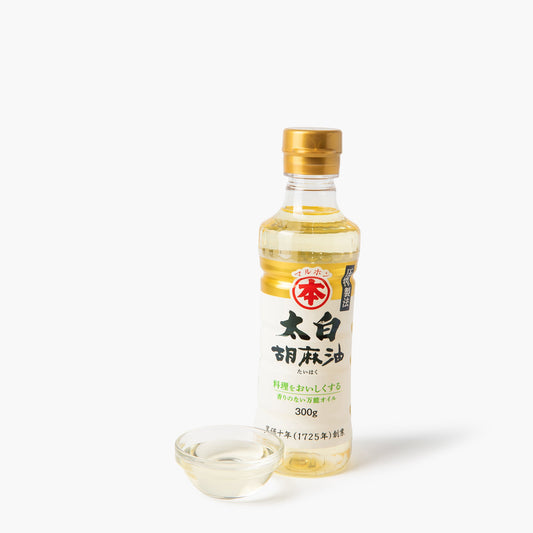

Virgin sesame oil ⋅ Maruhon ⋅ 300g
⋅ Cold-pressed from unroasted sesame seeds⋅ Artisanal production⋅ Adds depth to dishes without altering their taste or color⋅ Perfect for dressing salads or sautéing meats and...
Regular price 9.70 €Promotional price 9.70 € Regular priceUnit price 32.33 € by kg

Light roasted sesame oil in a can ⋅ Maruhon ⋅ 1.4kg
⋅ Cold-pressed from sesame seeds⋅ Artisanal production⋅ Amber color that brings out the natural hues of food⋅ Adds flavor and depth without overpowering dishes⋅ A staple...
Regular price 37.50 €Promotional price 37.50 € Regular priceUnit price 26.79 € by kg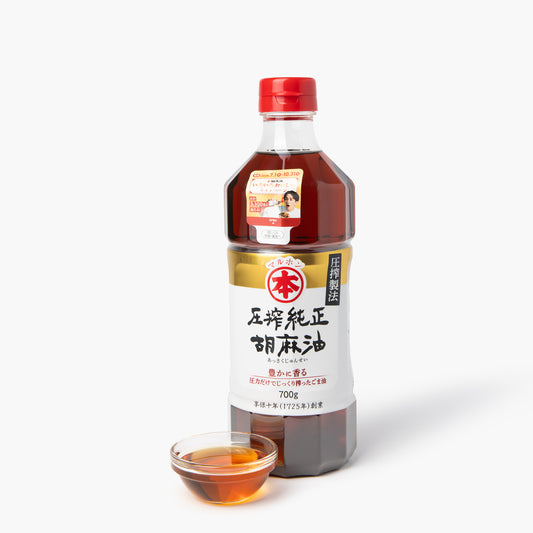
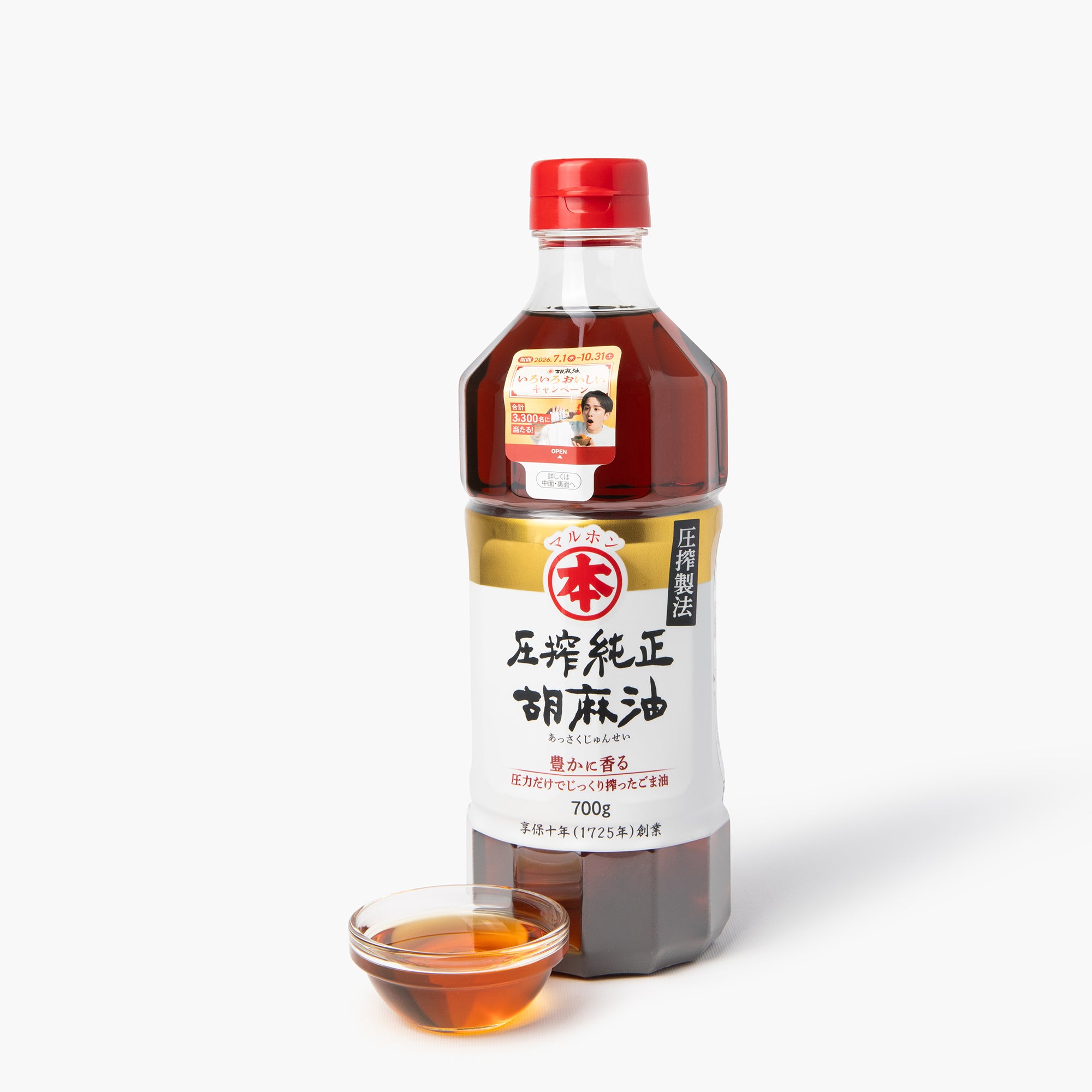
Classic sesame oil ⋅ Maruhon ⋅ 700g
⋅ Cold-pressed from sesame seeds⋅ Artisanal production⋅ Amber color that brings out the natural hues of food⋅ Adds flavor and depth to your dishes⋅ Can be...
Regular price 26.40 €Promotional price 26.40 € Regular priceUnit price 37.71 € by kg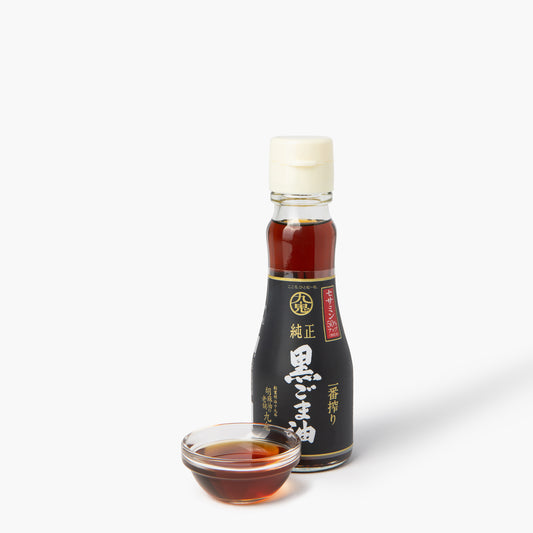
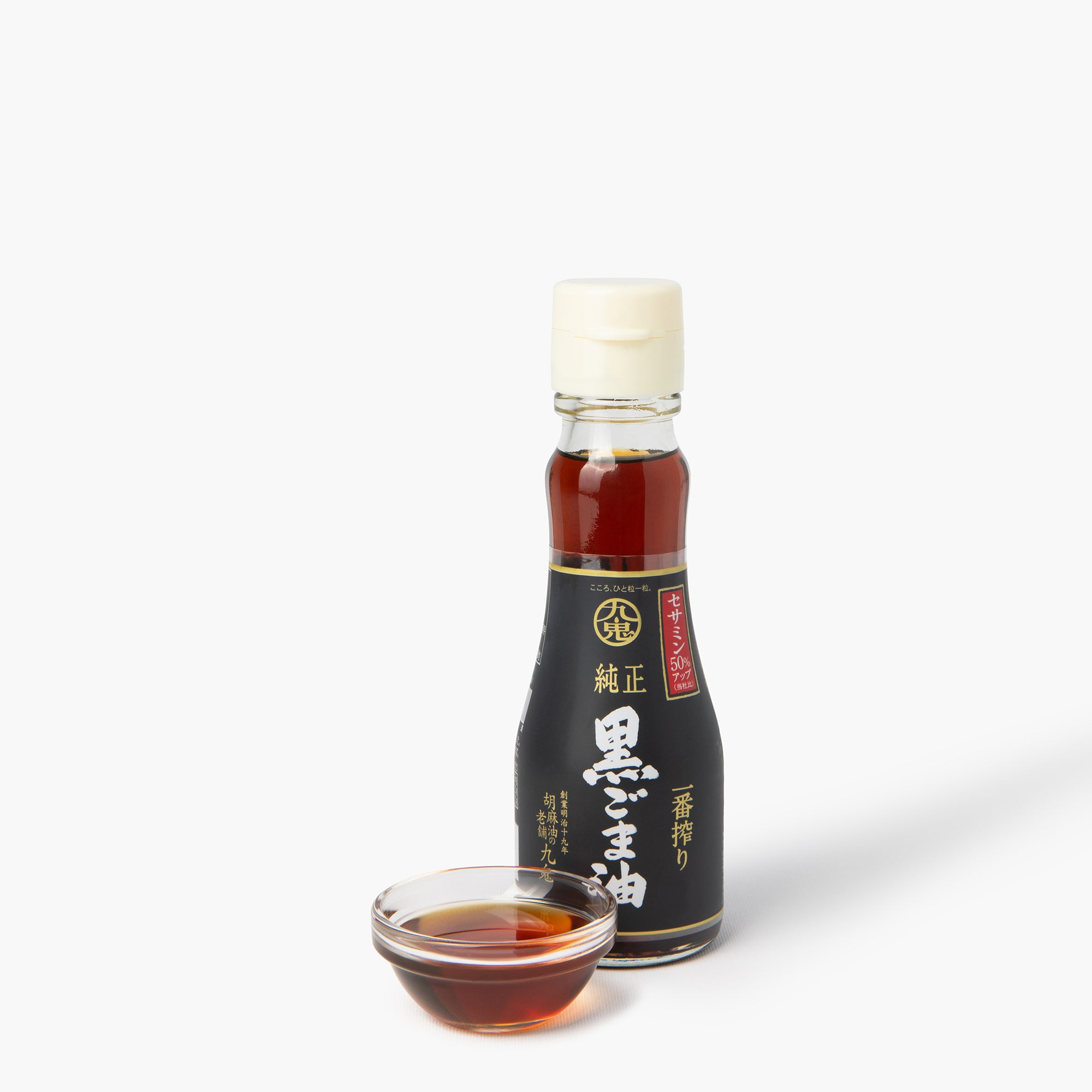
Black sesame oil ⋅ Kuki Sangyo ⋅ 150g
⋅ Intense flavor⋅ Use as a finishing oil to add flavor⋅ Adds volume to sauces and dressings⋅ Brings out the flavor of spicesThis oil is made...
Regular price 10.40 €Promotional price 10.40 € Regular priceUnit price 69.33 € by kgOur favorite recipes made with sesame oil


Learn more about sesame oil
What are the health benefits of sesame oil?
Sesame oil, particularly toasted sesame oil, is rich in unsaturated fatty acids and antioxidants. It can improve cardiovascular health thanks to its heart-healthy properties, notably by reducing bad cholesterol (LDL).
Because of its high vitamin E content, it also helps protect cells against premature aging and support the skin. In addition, sesame oil is known for its anti-inflammatory effects, which may benefit the joints and digestion.
Where does sesame oil come from?
Sesame oil originated in Asia, primarily in India and China, where sesame seeds have been cultivated for over 3,000 years. Used for culinary and medicinal purposes, sesame oil quickly crossed borders, becoming an integral part of Japanese cuisine in particular.
In Japan, it is often used for its unique aromas and health benefits. Sesame, cultivated in hot, dry regions, has been a key ingredient in Asian food culture, particularly in the preparation of sauces, vegetable dishes, soups, and noodles, and remains a flagship product in Japanese cuisine today.
Is Japanese sesame oil suitable for vegan and gluten-free diets?
Yes, Japanese sesame oil is entirely suitable for vegan and gluten-free diets. It is made from sesame seeds, a 100% plant-based product, and naturally contains no gluten. It can therefore be used without concern in vegan dishes, gluten-free recipes, or any other specific diet.
How to use sesame oil in Japanese cuisine?
Japanese sesame oil is a versatile ingredient that can be used in various ways in Japanese cuisine. Here are a few suggestions:
- Seasoning dishes: Add a few drops of sesame oil to enhance the flavor of soy sauces, vinegars, or salad dressings, or to noodle sauces such as udon or ramen.
- Sautéing and frying: Use sesame oil to sauté vegetables, tofu, or meat. It adds a rich, toasted flavor, especially when heated.
- In soups: Pour a little sesame oil into Japanese soups such as miso or broth to add depth of flavor.
- In cold dishes: Drizzle it over cold dishes such as vegetable salads or sushi to add a subtle aromatic touch.
- Garnishing dishes: You can also use it as a finishing touch for dishes such as donburi or grilled vegetables, or even as a dipping sauce for Japanese dumplings.
How does Japanese sesame oil differ from traditional sesame oil?
Japanese sesame oil differs from traditional sesame oil in its production method and organoleptic characteristics.
Japanese sesame oil:
- Varieties: It mainly comes in two types:
Light sesame oil (shiro goma abura): made from untoasted sesame seeds, it has a mild and subtle flavor.
Dark sesame oil (kuro goma abura): made from roasted sesame seeds, it has a more intense flavor and a pronounced nutty aroma.
- Culinary use: Dark sesame oil is commonly used in Japanese cuisine to season dishes such as salads, cold noodles, soups, and sauces.
Traditional sesame oil:
- Origin: Used in various Asian cuisines, particularly in China, India, and the Middle East, traditional sesame oil is also made from sesame seeds.
- Varieties: It is generally made from roasted sesame seeds, which give it a dark color and pronounced flavor.
- Culinary use: It is used for cooking, stir-frying, deep-frying, and as a seasoning in a variety of dishes, including sauces, marinades, and stir-fries.


