Delicate, colorful, poetic… Wagashi (和菓子) are not just Japanese sweets: they are true edible works of art. Hand-crafted and inspired by nature and the seasons, they tell a story with every bite. Behind their apparent delicacy lies a world of traditions, ancestral techniques, and subtle emotions.
Because savoring a wagashi is about much more than satisfying a sweet tooth: it’s about immersing yourself in Japanese aesthetics, feeling the passage of time, and celebrating the beauty of the moment. Whether enjoyed with matcha tea, marking a seasonal celebration, or given as a gift, these treats embody a whole philosophy.
Table of Contents
- The Origins and Evolution of Wagashi
- The Philosophy and Aesthetics of Wagashi
- Ingredients and production techniques
- The main categories of wagashi
- Wagashi and Japanese rituals
- Serving suggestions
I. The Origins and Evolution of Wagashi
It all began during the Nara (710–794) and Heian (794–1185) periods, when Japan opened up to Chinese cultural influence. Sugar, still rare and precious, made its tentative debut, reserved for the elite and Buddhist rituals. The first sweets took shape using simple ingredients: flour, rice, honey, or sake mash, carefully prepared to accompany religious celebrations or court life. Though more rustic than today’s wagashi, these early versions laid the foundation for the art of confectionery to come.
It was during the Edo period (1603–1868) that wagashi truly took off. Sugar, now more readily available thanks to trade with the Ryukyu Kingdom and subsequent refined local production, transformed Japanese confectionery. During this period, a creative boom emerged in major cities such as Edo (Tokyo), Kyoto, and Osaka.
But it was the tea ceremony (chanoyu) that truly elevated wagashi to a higher art form. Each confection was crafted to complement the bitterness of matcha, reflect the season, and evoke a visual response. Regional styles emerged, recipes were passed down, and wagashi became a codified art form where every detail matters.
While modern Japan has seen the rise of Western desserts, wagashi has never disappeared. It survives and thrives in traditional homes, carried on by generations of artisans committed to preserving the techniques of the past. At the same time, it is reaching a wider audience: sold at train stations, offered as omiyage (souvenirs) in pretty boxes, or included in the famous ekiben (travel bento boxes).
Every region in Japan continues to cherish its local specialties, which are often inspired by the local terrain, climate, or historical events. Wagashi has become a living symbol of Japanese heritage, balancing time-honored tradition with a subtle adaptation to modern tastes.
II. The Philosophy and Aesthetics of Wagashi
The relationship to the seasons (kisetsukan)
In Japan, wagashi is a true celebration of the seasons. Imagine a delicate treat that, in spring, takes on the pink hues of cherry blossoms, and in autumn, the fiery reds of maple leaves.
Every ingredient, every shape, every color follows the natural cycle with almost poetic precision. To eat a wagashi is to savor the moment, to feel the fleeting beauty of a season, and to be swept away by that subtle kisetsukan—that unique feeling that stirs the Japanese soul with every change of the seasons.
Symbolism and Poetry
Each wagashi is a small work of art imbued with hidden meanings. A chrysanthemum evokes longevity, while a maple leaf symbolizes the eternal cycle of life. These motifs are not chosen at random: they convey a story, an emotion, or a philosophy.
Beyond mere sweetness, wagashi celebrates nature, the moon, the rain, and blossoms—all poetic images that invite contemplation. Tasting a wagashi is like stepping into a world where every shape and color becomes a delicate metaphor, an invitation to dream and meditate.
Wagashi perfectly embodies two key concepts of Japanese aesthetics: wabi-sabi, which celebrates the beauty of imperfection and transience, and mono no aware, that bittersweet emotion evoked by the fragility of passing time.
Each treat is conceived as a delicate, subtly imperfect work of art that invites you to savor the moment. But aesthetics go beyond taste: presentation is key. The choice of tableware, the delicacy of the packaging, and the visual composition on the tray all contribute to this unique moment, where beauty and flavor blend to awaken the senses.

III. Ingredients and Production Techniques
The basic ingredients
Anko (red bean paste):
Tsubuan, a grainy paste with pieces of beans
.Koshian, a very smooth and silky paste
.
Mochi: a type of glutinous rice that has a soft, chewy texture
.
Shiratamako: rice flour used for its lightness and elasticity
.
Japanese cane sugar: a natural, mild sugar that enhances flavors without being overpowering
.
Agar-agar (kanten): a plant-based gelling agent used for its transparency and firmness
.
Local and seasonal ingredients:
- Fresh fruit, depending on the season
- Chestnuts
- Sweet potatoes
- Kinako (roasted soybean flour), which adds a warm, toasty aroma.
Artisanal manufacturing process
The art of making wagashi is rooted in time-honored traditions passed down from generation to generation. Each step is carried out by hand, with precise, almost choreographed movements that reflect a high level of craftsmanship.
Steaming, a commonly used method, produces a soft texture while preserving the delicate nature of the ingredients. Next comes shaping, a crucial step in which the artisan gives form to the confection, carefully sculpting flowers, leaves, or seasonal symbols.
Freshness is key: most wagashi have a very short shelf life, sometimes lasting only a few hours. It is this fleeting nature that gives them their charm—a treat to be savored in the moment, at the peak of its flavor.
IV. The Main Categories of Wagashi
By texture type and method
Wagashi are divided into several categories based on their texture and production method, each offering a unique experience.
- Namagashi: These are the freshest and most delicate types of wagashi, often served during the tea ceremony. Made with moist ingredients such as anko or mochi, they must be eaten quickly and are distinguished by their artistic refinement
. - Higashi: In contrast, these dry, molded sweets are very sweet and have a long shelf life. Often made with sugar and rice flour, they are perfect for enjoying with a cup of bitter green tea
. - Yokan: This dense jelly made from red bean paste (anko) and agar-agar (kanten) has a texture that is both firm and melt-in-your-mouth. It comes in blocks that are cut into thin slices.
- Mochigashi: a category of wagashi made from glutinous rice dough, these sweets are prized for their soft, chewy texture and are often filled with anko or dusted with kinako.
Some notable examples
- Daifuku: a soft mochi ball filled with red bean paste, sometimes topped with fresh fruit such as strawberries for a touch of tartness
. - Dorayaki: two fluffy pancakes filled with a generous layer of red bean paste. This classic treat is also the favorite of the famous character Doraemon
. - Monaka: thin, crispy wafers shaped like flowers or leaves, filled with anko or sometimes more modern ingredients such as chestnut cream
. - Manju: small, round, steamed treats with a flour wrapper and a sweet filling inside, often served during holidays
. - Warabi mochi : a summer dessert with a soft, translucent texture, dusted with kinako for a mild, toasty flavor
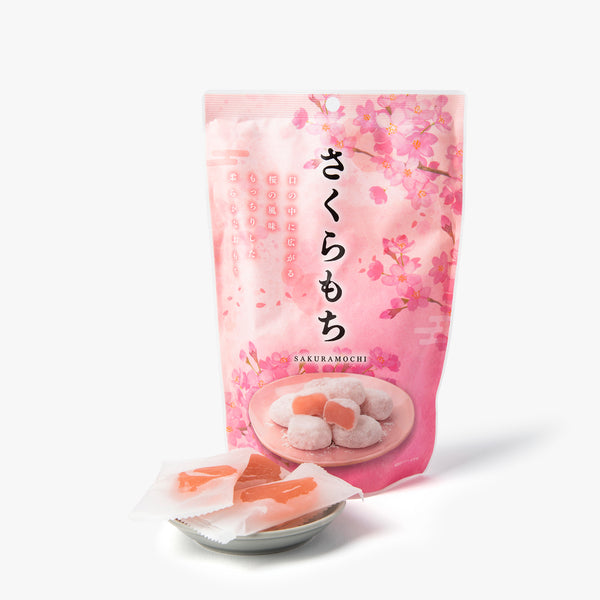
. - Hanabira mochi, Kashiwa mochi, Sakura mochi: these seasonal variations are associated with specific rituals—such as New Year’s, Children’s Day, or hanami—and blend aesthetics, symbolism, and tradition.
V. Wagashi and Japanese Rituals
The tea ceremony (chanoyu)
Wagashi plays an essential role in the tea ceremony, providing a sweetness that balances the bitterness of matcha. It is carefully selected based on the season, the mood of the moment, and the relationship between the host and the guests. Their presentation, in matching tableware, contributes fully to the harmony of the ritual.
Traditional Offerings and Festivals
Wagashi are traditionally served during major Japanese festivals, such as Hina Matsuri (Girls’ Day), Tanabata (Star Festival), Otsukimi (Moon Viewing), and New Year’s. They are also placed as offerings on household altars or in temples, in homage to ancestors or deities.
Gifts and Japanese Etiquette
Giving wagashi is a common practice in Japanese culture. Presented in elegant boxes, they serve as omiyage (travel souvenirs) or seasonal gifts such as ochūgen (summer) and oseibo (winter). The choice of wagashi—its appearance, meaning, and seasonality—reflects the care taken in the relationship and the message being conveyed.
VI. Serving Suggestions
To fully enjoy wagashi, it’s important to pair it with the right tea. Matcha, with its strong, bitter flavor, is ideal with namagashi, which are very sweet and refreshing. Higashi, or dry wagashi, on the other hand, pair best with a light green tea such as sencha or genmaicha, which has roasted notes.
The tasting is best enjoyed in a quiet setting, in the early afternoon or during a break. The experience is as much visual as it is gustatory: one admires the shapes and colors before tasting, in harmony with the rhythm of the seasons. Room temperature, elegant tableware, and the chosen moment make the tasting even more memorable.