


Collection: Japanese curry
Born in India, Japanese curry - or "kare raisu" as the Japanese call it - is very popular because it's cheap and easy to prepare. It appeals to students and nostalgic gourmets alike. Less spicy than the Indian version, its thick, subtly sweet sauce makes it the perfect family comfort dish. There are as many recipes as there are cooks. You can buy it as a ready-to-dilute bouillon cube, or make your own powdered curry roux. It's best enjoyed simply with rice and sometimes noodles.
Discover our selection of curries to reheat or cook for the most motivated!

-


Spicy mushroom curry ⋅ Ohsawa ⋅ 210g
⋅ Spicy curry, cooked with mushrooms and melting vegetables⋅ Natural ingredients, no preservatives⋅ Ready in minutes⋅ Perfect with rice, bread or pasta...
Regular price 5.55 €Prix promotionnel 5.55 € Regular pricePrice per unit 26.43 € per kg -


Mild vegetarian curry ⋅ Ohsawa ⋅ 210g
⋅ Smooth, mild curry, rich in vegetables⋅ Balanced flavour with slightly sweet and spicy notes⋅ Ideal for those who like their curries a little spicy...
Regular price 5.35 €Prix promotionnel 5.35 € Regular pricePrice per unit 25.48 € per kg -


Vegetarian spicy curry ⋅ Ohsawa ⋅ 210g
⋅ Spicy, vegetable-rich curry⋅ Spicy and slightly sweet⋅ Ready in 2 minutes⋅ Enjoy with rice, noodles, vegetables or as a...
Regular price 5.35 €Prix promotionnel 5.35 € Regular pricePrice per unit 25.48 € per kg -


Spicy root vegetable curry ⋅ Ohsawa ⋅ 210g
⋅ Spicy vegetarian curry with authentic root vegetables⋅ Crunchy texture and balanced flavours, sweet and spicy⋅ Quick and easy to prepare⋅ Perfect with rice or noodles...
Regular price 5.35 €Prix promotionnel 5.35 € Regular pricePrice per unit 25.48 € per kg -

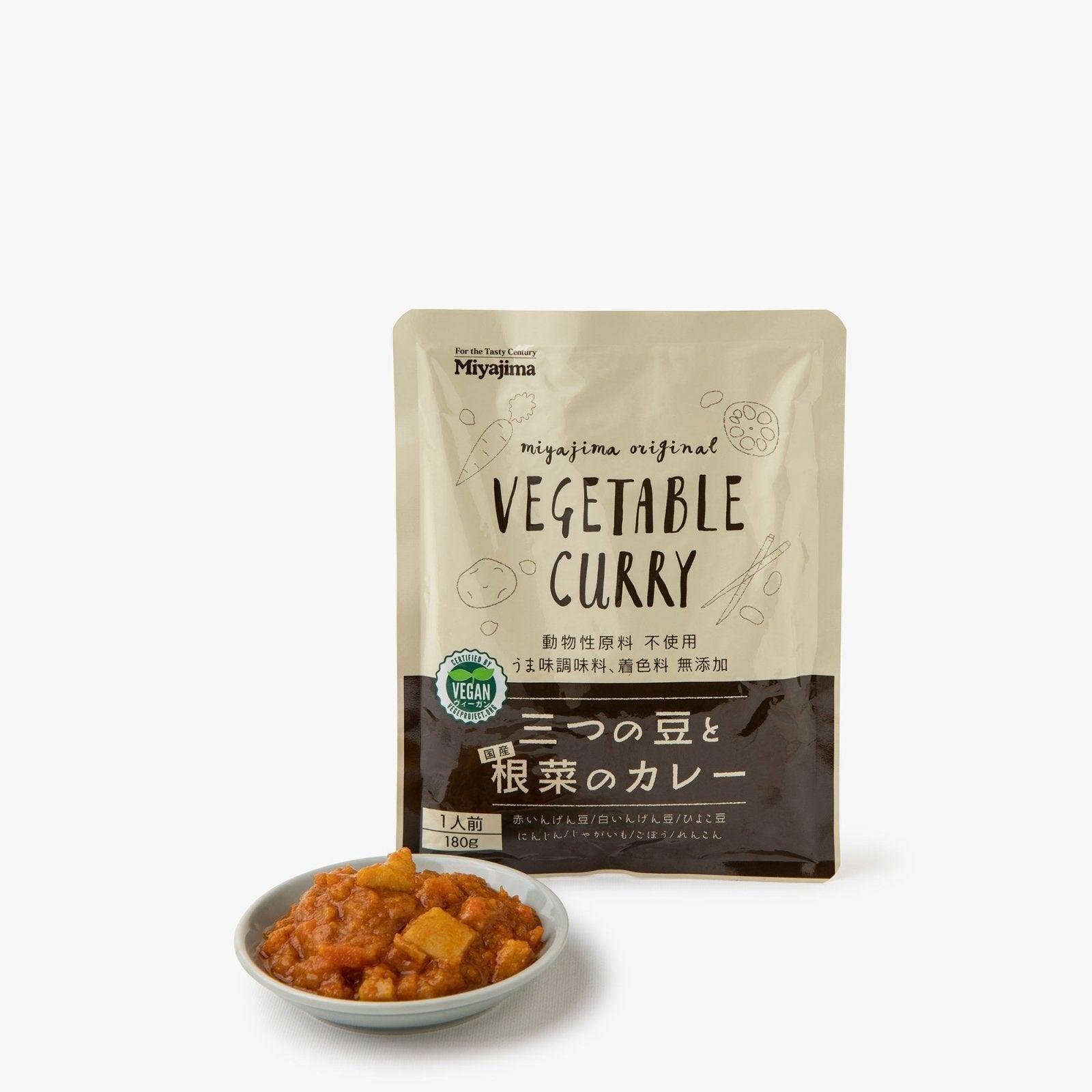
Japanese curry with 3 beans and sweet vegetables ⋅ Miyajima Shoyu ⋅ 180g
⋅ Vegetarian curry with 3 beans and mild vegetables⋅ Rich, mild and slightly spicy flavor⋅ Serve with rice or noodles⋅ Ready in a few minutes...
Regular price 6.15 €Prix promotionnel 6.15 € Regular pricePrice per unit 34.17 € per kg -


Torokeru Mild Curry Sauce ⋅ S&B ⋅ 144g
Easy and quick to prepare. Perfect for meat, vegetables, and noodles. You can use a single cube to enhance broth or...
Regular price 5.50 €Prix promotionnel 5.50 € Regular pricePrice per unit 38.19 € per kg -
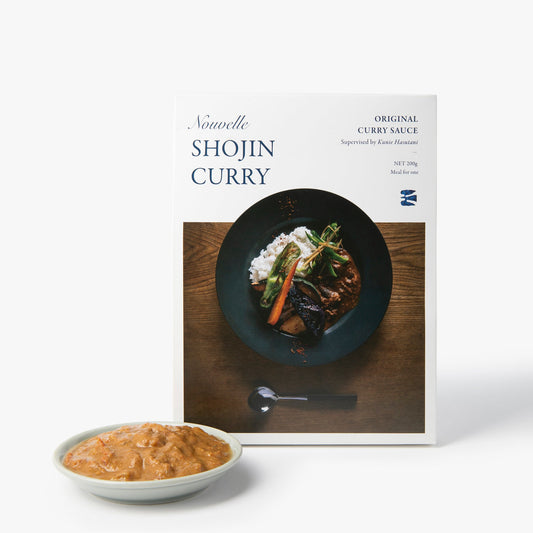
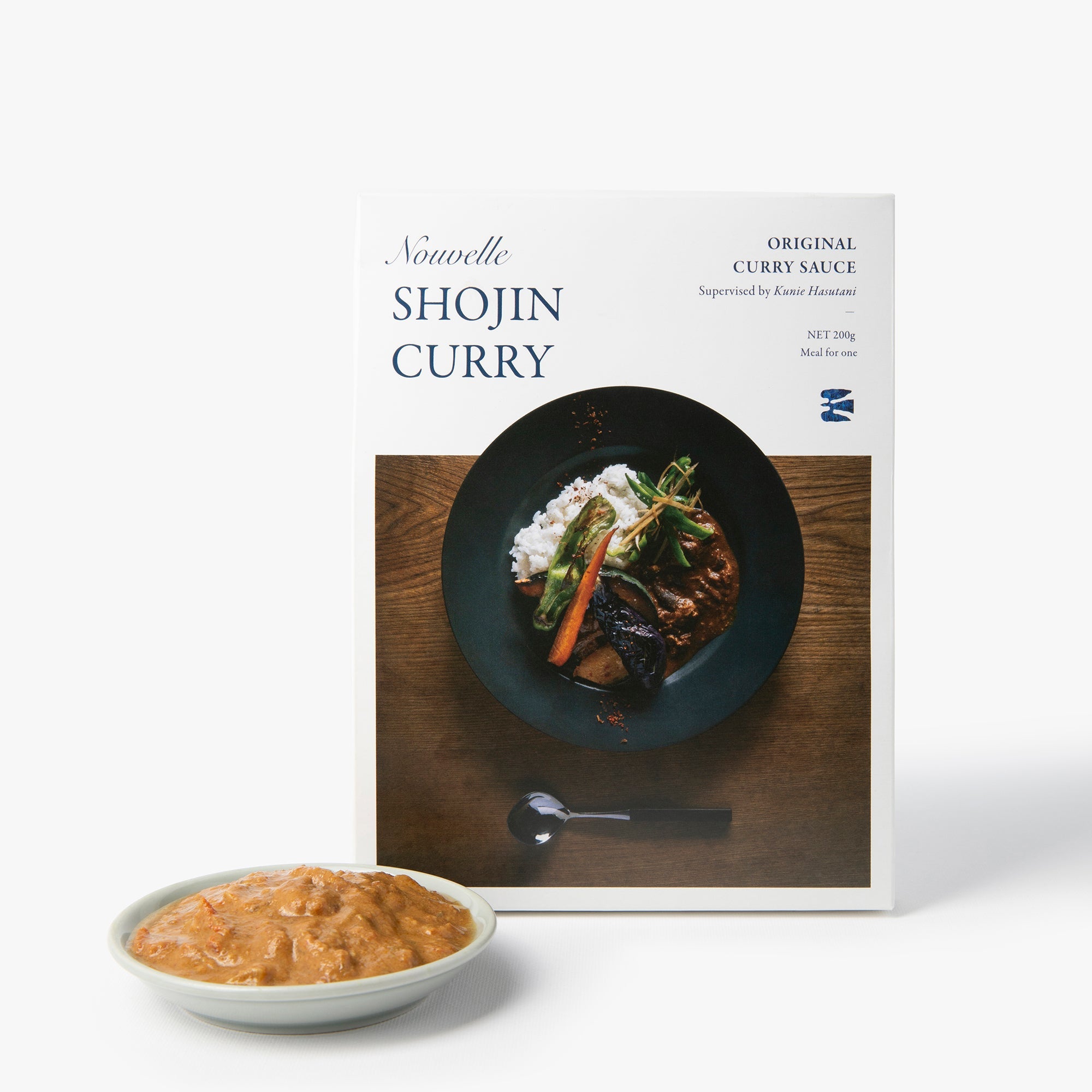
Premium sweet vegetable shojin curry ⋅ Hasutani Kunie ⋅ 200g
⋅ Mild vegan curry inspired by Buddhist shojin⋅ Cooking with simmered vegetables, without additives or preservatives⋅ Developed by Kunie Hasutani, figure of the...
Regular price 12.00 €Prix promotionnel 12.00 € Regular pricePrice per unit 60.00 € per kg -


Torokeru Spicy Curry Sauce ⋅ S&B ⋅ 144g
⋅ Balanced flavor with umami notes ⋅ Durable and easy to maintain ⋅ Handcrafted product made by Kobayashi Farm A thick sauce in tablet form offering a deep umami flavor and...
Regular price 5.50 €Prix promotionnel 5.50 € Regular pricePrice per unit 38.19 € per kg -


Curry with doburoku and sweet koji ⋅ Taiheido ⋅ 200g
⋅ Handcrafted curry made with Niigata rice flour⋅ Gluten-free⋅ Made with doburoku (unfiltered sake) and spicy koji⋅ Inspired by...
Regular price 10.50 €Prix promotionnel 10.50 € Regular pricePrice per unit 52.50 € per kg -
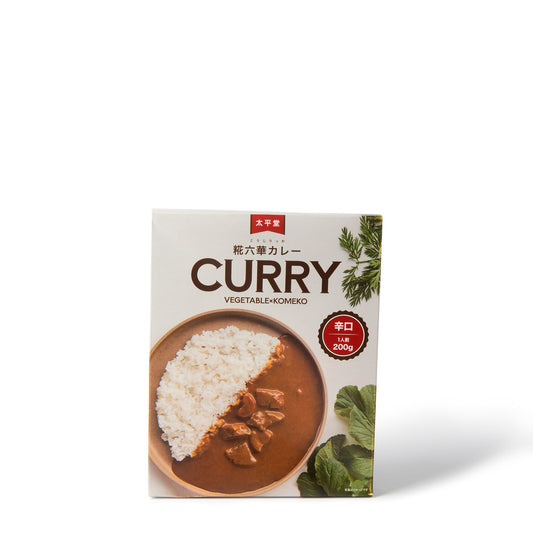

Curry with doburoku and spicy koji ⋅ Taiheidô ⋅ 200g
⋅ Handcrafted curry made with Niigata rice flour⋅ Gluten-free⋅ Made with doburoku (unfiltered sake) and spicy koji⋅ Inspired by...
Regular price 10.50 €Prix promotionnel 10.50 € Regular pricePrice per unit 52.50 € per kg -


Hayashi sauce tablet ⋅ S&B ⋅ 140g
⋅ Quick and easy to prepare⋅ Deep, creamy umami taste⋅ Use in meat dishes, stews, stir-fries and vegetables⋅ Can be used with a single square...
Regular price 5.50 €Prix promotionnel 5.50 € Regular pricePrice per unit 39.29 € per kg -


Sweet curry with vegetables ⋅ Nishiki Shokuhin ⋅ 100g
⋅ Perfect for children⋅ Contains 60g of vegetables per sachet⋅ Contains no chillies or strong spices⋅ Ideal for accompanying rice, omelettes,...
Regular price 4.90 €Prix promotionnel 4.90 € Regular pricePrice per unit 49.00 € per kg -


Hayashi sauce tablet ⋅ S&B ⋅ 160g
⋅ Hayashi sauce in bars⋅ Deep flavor of beef, soy, onions and spices⋅ Perfect with meats, stews, vegetables or simmered dishes⋅ Easy to prepare in just a few...
Regular price 4.50 €Prix promotionnel 4.50 € Regular pricePrice per unit 28.13 € per kg -


Mild golden curry roux ⋅ S&B ⋅ 198g
⋅ Spicy curry roux, in tablets⋅ Creamy, thick texture, perfect for topping⋅ Perfect with meats and vegetables and rice⋅ Also ideal as a seasoning for...
Regular price 5.90 €Prix promotionnel 5.90 € Regular pricePrice per unit 29.80 € per kg -


Mild curry roux ⋅ Ohsawa ⋅ 160g
⋅ Mild, fragrant curry paste⋅ Perfect for preparing curries, meat marinades or grilled vegetables⋅ A must-have for Japanese cuisineThis curry paste...
Regular price 9.50 €Prix promotionnel 9.50 € Regular pricePrice per unit 59.38 € per kg -


Spicy golden curry roux ⋅ S&B ⋅ 198g
⋅ Spicy curry roux, in tablets⋅ Creamy, thick texture, perfect for topping⋅ Perfect with meats and vegetables and rice⋅ Also ideal as a seasoning for...
Regular price 5.90 €Prix promotionnel 5.90 € Regular pricePrice per unit 29.80 € per kg -


Very spicy golden curry roux ⋅ S&B ⋅ 198g
⋅ Very hot curry roux, in tablet form⋅ Creamy, thick texture, perfect for topping⋅ Perfect with meats and vegetables and rice⋅ Also ideal as a seasoning...
Regular price 5.90 €Prix promotionnel 5.90 € Regular pricePrice per unit 29.80 € per kg -


Spicy curry roux ⋅ Ohsawa ⋅ 160g
⋅ Pungent curry paste with a balanced, slightly spicy taste⋅ Perfect for curries, meat, fish or vegetable marinades⋅ Creamy, smooth texture⋅ An indispensable...
Regular price 9.50 €Prix promotionnel 9.50 € Regular pricePrice per unit 59.38 € per kg -


Spicy Torokeru curry sauce ⋅ S&B ⋅ 180g
⋅ Piquant curry roux tablets⋅ Deep, sweet⋅ Salty and tangy⋅ Ideal with meats, vegetables or rice dishes⋅ Also ideal as a seasoning...
Regular price 5.50 €Prix promotionnel 5.50 € Regular pricePrice per unit 30.56 € per kg -


Vegetable Currry ⋅ Nishiki Shokuhin ⋅ 180g
⋅ Made with vegetable puree⋅ Slightly spicy⋅ Contains none of the major allergens⋅ Perfect for people with dietary restrictions⋅ Ideal for...
Regular price 6.30 €Prix promotionnel 6.30 € Regular pricePrice per unit 35.00 € per kg


Japanese curry
What's the recipe for traditional Japanese curry?
Preparation time :
- Preparation time: 15 minutes
- Cooking time: 45 minutes
Ingredients:
- 500g meat (beef, chicken or pork)
- 2 onions, chopped
- 2 carrots, sliced
- 2 potatoes, cubed
- 800ml stock (vegetable or chicken)
- 2 tablespoons oil
- 1 tin Japanese curry roux
- 1 tablespoon soy sauce
- Salt and pepper to taste
- Japanese rice to accompany
Preparation:
- In a large saucepan, sauté the onions in the oil. Add the carrots and potatoes, then the meat. Brown everything.
- Pour in the stock and simmer for 30 minutes, until the vegetables are tender and the meat cooked.
- Add the Japanese curry roux directly to the pan and stir well until the sauce thickens. Cook for a further 10-15 minutes.
- Add soy sauce, salt and pepper. Serve with Japanese rice:
What makes Japanese curry so special?
Japanese curry, known as "kare" (カレー), is a unique and popular version of curry that is distinguished by several characteristics:
- Mildness and flavor: Japanese curry is generally milder and less spicy than Indian or Thai curries. It has a sweet flavor due to the addition of apples, honey or sugar.
- Roux : La base du curry japonais est appelé "roux", mélange de farine et de graisse, auquel on ajoute des épices pour obtenir une consistance épaisse et onctueuse.
- Ingrédients principaux : Les principaux ingrédients sont les légumes (pommes de terre, carottes, oignons) et la viande (bœuf, poulet ou porc). Les ingrédients sont coupés en morceaux relativement gros.
- Preparation: Vegetables and meat are often sautéed, then simmered in water or broth with roux until tender and the sauce thickens.
- Servi avec du riz : Le curry japonais est presque toujours servi avec du riz blanc, appelé "kare raisu" (カレーライス). Le riz absorbe la sauce épaisse, offrant une combinaison de textures et de saveurs.
Japanese curry is a comforting, family-style dish that can be prepared in just a few minutes, and is at the heart of Japanese cuisine in restaurants and at home!
Why is curry so popular in Japan?
Le curry japonais est devenu un plat incontournable en raison de son goût unique et de la simplicité de sa préparation. Introduit au Japon au 19e siècle par les Britanniques, il a rapidement été adapté à la cuisine japonaise en remplaçant les épices fortes par des saveurs plus douces. Aujourd'hui, le curry japonais se décline en plusieurs variantes, incluant des légumes, de la viande (comme le poulet, le porc ou le boeuf), et parfois même des pommes ou du gingembre pour apporter de la douceur et de la complexité.
Ce plat est souvent servi avec du riz, un accompagnement parfait qui adoucit les saveurs épicées. Facile à préparer, il est aussi très apprécié en France, où de plus en plus de personnes l’adoptent. Le roux de curry, souvent acheté sous forme de pâte ou de bouillon, facilite la préparation, et le temps de cuisson est relativement court, souvent entre 30 et 40 minutes. Le curry japonais est donc un plat polyvalent qui peut être adapté à de nombreux goûts et qui offre une multitude de variantes pour satisfaire tous les palais, qu'ils soient amateurs de plats épicés ou non.
What are the best accompaniments for a Japanese curry?
- Japanese rice As mentioned above, Koshihikari rice, a short-grain Japanese rice, is most commonly served with curry. Its slightly sticky texture allows it to absorb the sauce perfectly.
- Japanese omelette (Tamagoyaki) A mild, slightly sweet omelette, often served sliced, can add a sweet note to balance the spicy flavours of the curry. It's a classic accompaniment, particularly popular in Japanese restaurants.
- Japanese pickles (Tsukemono) These pickled vegetables, often with ginger or soy, add a freshness and lightness that balances the richness of the curry. They are also used to complement curry soup with contrasting textures.
- Noodles Udon or Soba Although rice is the traditional accompaniment, some people prefer Japanese noodles such as Udon (thicker) or Soba (buckwheat-based). They also soak up the curry sauce and add an extra kick to dishes.
- Sautéed vegetables: Sautéed carrots, onions or peppers can add color and texture to a dish. They're also rich in flavor, adding a sweet, slightly caramelized edge.
- Meat: Although Japanese curries often contain meat (chicken, beef or pork), grilled meats or meat croquettes such as tonkatsu (breaded pork) or chicken katsu (breaded chicken) are perfect options to accompany a curry. These products can be served separately or added to the curry for even greater richness.
- Soy sauce or hot pepper: For lovers of spicy dishes, a touch of soy sauce or a little hot pepper added on the side can further enrich the flavors of Japanese curry.
How do you thicken a Japanese curry that's too runny?
If your Japanese curry is too runny, there are several simple tricks to thicken it while retaining the flavor and texture of the dish. Here are a few popular methods:
- Using curry roux: The most common way to thicken a Japanese curry is to add curry roux (often in block or paste form). Roux is made from flour and fat (usually oil or butter) and thickens the curry while adding richness to the sauce. If you've used a pre-made roux such as those from Vendor S&B, add a little more to achieve the desired consistency.
- Reduce the curry : If your curry is too liquid, you can also simmer the mixture over a low heat so that some of the water evaporates. This will concentrate the flavours and naturally thicken the sauce. Be careful not to overcook the vegetables or meat.
- Add potatoes: Potatoes are often used in Japanese curry recipes. They contain starch, which means they can be used to thicken the sauce. You can add cubed potato pieces and leave them to cook in the curry. They will partially break down and thicken the sauce.
- Miso paste: A small amount of miso paste can also thicken and add a touch of umami flavor. Mix it with a little broth or water to incorporate it into your curry without disturbing its consistency.
- Add soy sauce or thick broth: Sometimes, a touch of soy sauce or a little broth (such as beef or chicken broth) can also help thicken and concentrate the flavor of your curry.
Cook Japanese curry


