




Collection: Japanese noodles
While Japan is known as the land of rice, sushi isn't the only thing in life, and noodles play an important role in the daily lives of the Japanese. It is said that there are as many recipes as there are villages. Their affordability, ease of preparation, and versatility explain their popularity. Most are made from wheat, but there are also buckwheat, seaweeds vegetable varieties. Try them all to find your favorite!


-


Soba noodles 100% buckwheat ⋅ Shinshu Togakushi Soba ⋅ 200g
⋅ Made with buckwheat flour⋅ Gluten-free⋅ Quick to cook⋅ Perfect in a hot broth with tempura⋅ Delicious cold with a men⋅ tsuyu sauceThese noodles...
Regular price 5.50 €Prix promotionnel 5.50 € Regular pricePrice per unit 27.50 € per kg -


Concentrated tsuyu sauce ⋅ Morita ⋅ 340ml
⋅ Versatile, easy-to-use sauce⋅ Delicious for dipping noodles, tempura & gyozas⋅ Can be used as a light seasoning for sushi and sashimi⋅ Good soup base...
Regular price 5.40 €Prix promotionnel 5.40 € Regular pricePrice per unit 15.88 € per l -


Soba noodles 100% buckwheat premium ⋅ Honda shoten ⋅ 180g
⋅ Made with buckwheat flour⋅ Gluten-free⋅ Quick to cook⋅ Perfect hot in a broth⋅ Delicious cold with a tsuyu⋅ Premium sauce These soba noodles are...
Regular price 9.40 €Prix promotionnel 9.40 € Regular pricePrice per unit 52.22 € per kg -
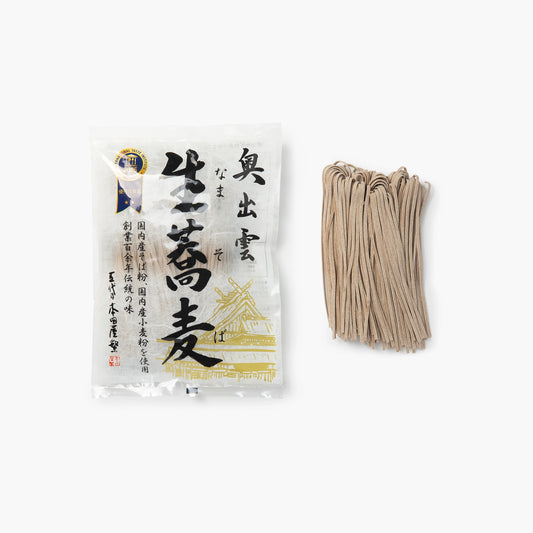
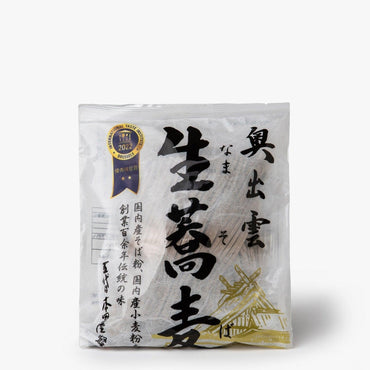
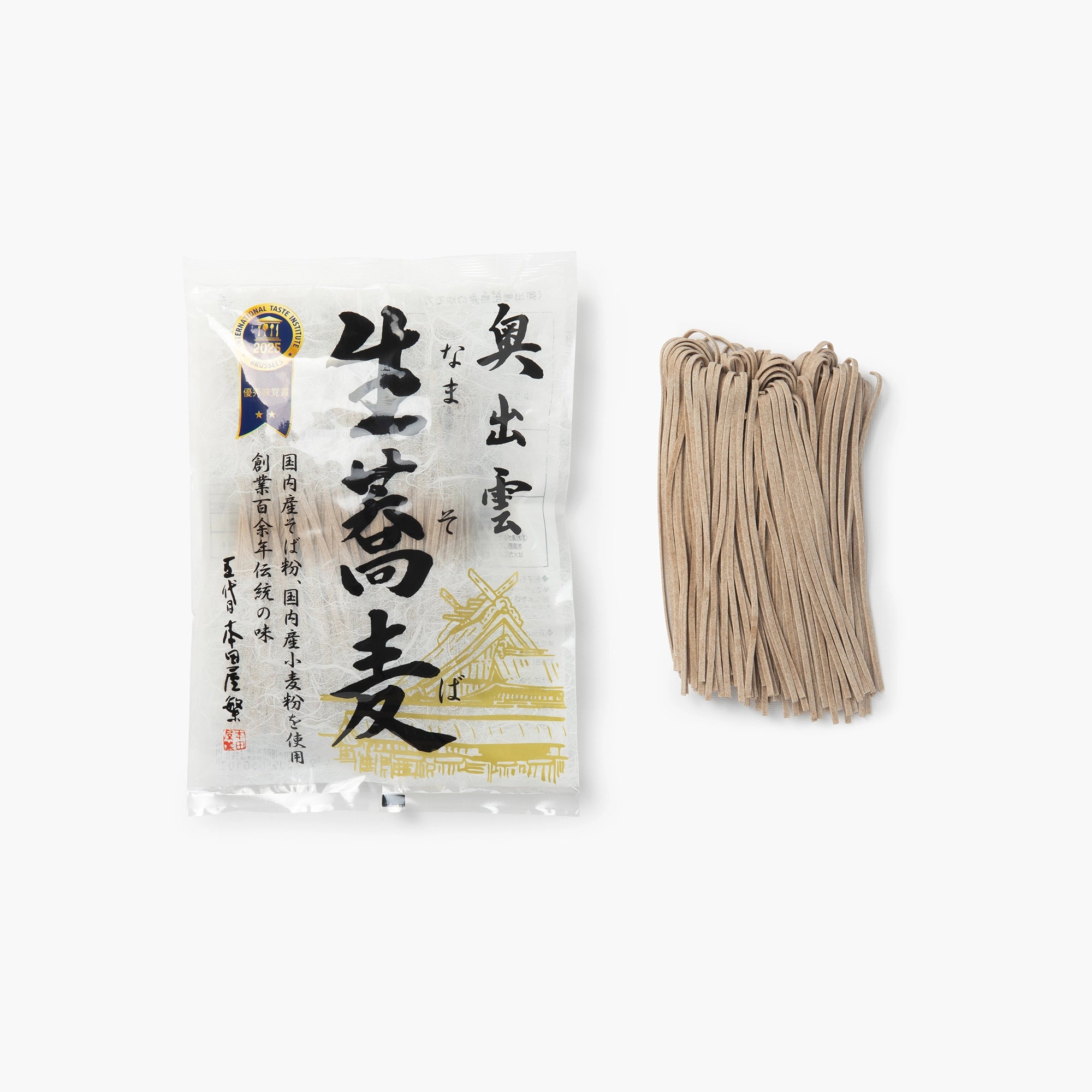
Okuizumo soba noodles ⋅ Honda shoten ⋅ 200g
⋅ Made with Oku Izumo buckwheat flour⋅ No additives or preservatives⋅ Quick cooking⋅ Serve hot in a broth or cold with...
Regular price 6.90 €Prix promotionnel 6.90 € Regular pricePrice per unit 34.50 € per kg -


Men-tsuyu Noodle Sauce ⋅ Goto Shoyu ⋅ 100ml
⋅ Sauce men⋅ tsuyu⋅ Ideal for soaking soba and other noodles⋅ Balanced flavor⋅ Suitable for all types of useThis sauce is composed of dashi broth, sauce...
Regular price 5.70 €Prix promotionnel 5.70 € Regular pricePrice per unit 57.00 € per l -


Yam soba noodles ⋅ Shinshu Togakushi Soba ⋅ 220g
⋅ Made from Japanese buckwheat and yam flour⋅ Speciality from the Togakushi region⋅ Quick to bake⋅ Firm and elastic texture⋅ Ideal both hot and coldThe...
Regular price 4.10 €Prix promotionnel 4.10 € Regular pricePrice per unit 18.64 € per kg -


Izumo soba noodles ⋅ Tanaka Bussan ⋅ 200g
⋅ Made with Izumo buckwheat flour⋅ Perfect in a hot broth with tempuras⋅ Delicious cold with a men⋅ tsuyu⋅ sauce Deep flavor⋅...
Regular price 4.90 €Prix promotionnel 4.90 € Regular pricePrice per unit 24.50 € per kg -


Sauce for mentsuyu noodles with yuzu ⋅ Daisho ⋅ 185g
⋅ Mentsuyu sauce⋅ Scented with yuzu⋅ Dimension umami⋅ Ideal for dipping your noodles⋅ To spice up a brothYuzu mentsuyu is a traditional Japanese sauce that combines...
Regular price 3.65 €Prix promotionnel 3.65 € Regular pricePrice per unit 19.73 € per kg -


Concentrated tsuyu sauce ⋅ Morita ⋅ 1L
⋅ Multi-purpose sauce⋅ Convenient 1L format⋅ Nice umami dimension⋅ Ideal as a broth or dipping sauce for your noodles⋅ Superb as a marinadeThis multi-purpose sauce is...
Regular price 12.00 €Prix promotionnel 12.00 € Regular pricePrice per unit 12.00 € per l -


Green tea soba noodles ⋅ Tanaka Bussan ⋅ 200g
⋅ Made with buckwheat flour, wheat and green tea⋅ Fresh taste with hints of bitterness⋅ Perfect in a hot broth with...
Regular price 3.20 €Prix promotionnel 3.20 € Regular pricePrice per unit 16.00 € per kg


Our favorite Japanese noodle recipes!
-
Recipe for vegetable yasai soba
See the recipe
-
Recipe Fresh soba noodles
See the recipe
-
Instant ramen at home
See the recipe
-
Summer Somen recipe with kaeshi broth
See the recipe
-
Tomato and tuna somen recipe
See the recipe
-
Home-made Tonkotsu Ramen
See the recipe
-
Recipe Sesame Somen with Vegetables
See the recipe


Find out more about Japanese noodles
What are the different types of Japanese noodles?
Japanese noodles come in several types, each with its own unique characteristics. The ramen are thin wheat noodles, often served in a rich, flavorful broth. The udon are thick, chewy noodles, also made from wheat, and are often served in a light broth. The soba are thinner buckwheat-based noodles, known for their slightly grainy texture and earthy flavor. In addition to these varieties, there are also somen noodles (thin and white, usually served cold) and shirataki (konjac-based, very low-calorie).
What's the difference between ramen, udon and soba noodles?
Ramen, udon and soba differ mainly in their ingredients, texture and method of preparation. The ramen are made from wheat, often served in a rich meat or fish broth, and have a firm texture. The udonalso made from wheat, are much thicker and chewier, with a softer texture, ideal for light or slightly spicy soups. The soba are made from buckwheat, which gives them a brown color and earthier flavor. They are often served cold with a dipping sauce (tsuyu) or hot in a broth.
How to choose the right noodles for a Japanese recipe?
The choice of Japanese noodles depends on the dish you wish to prepare. For a comforting bowl of ramen, choose ramen noodles that absorb the flavors of the broth. If you want a lighter dish, udon noodles with their thick texture are perfect for light soups or stir-fried dishes. For a lighter, more nutritious option, soba are ideal, especially for cold salads or hot soups. For a low-calorie dish, konjac-based shirataki noodles are an excellent alternative.
How to cook Japanese noodles without sticking them?
To cook Japanese noodles without sticking, be sure to immerse them in plenty of unsalted boiling water. Stir immediately after adding them to the water to prevent them from sticking together. Once cooked, drain and rinse immediately under cold water to remove excess starch, especially for soba noodles. Adding a little oil after rinsing can also help prevent them from sticking, especially if they are to be set aside before serving.
What's the difference between hand-drawn noodles and other types?
The secret lies in the ratio of water to flour in the dough.
Machine-made noodles generally contain around 40% water, while hand-drawn noodles contain around 50%. It is very difficult to obtain a ratio higher than 50%, even when working with hand-drawn noodles.
Water enables the formation of gluten in the dough, which gives the noodles their elasticity and adherence.
What's more, the higher the water ratio, the faster the noodles will be rehydrated, significantly speeding up cooking time and reducing the risk of noodle damage.


