




Collection: Tous nos produits japonais
Après plus de deux ans passés à méticuleusement les sourcer, iRASSHAi vous propose une sélection de plus de 1000 produits, importés du Japon et dont les trois quarts sont vendus en France pour la première fois. Découvrez des produits d’épicerie japonais authentiques pour sublimer votre cuisine ! Et si vous ne savez pas par où commencez, nous rédigeons régulièrement des recettes pour tous les goûts et tous les niveaux pour vous donner des idées.


-


Ramen instantanés au miso vegan ⋅ Kurata Shokuhin ⋅ 130g
⋅ Cuisson rapide⋅ Vegan⋅ Bouillon riche à base de miso⋅ Parfait avec des champignons, des légumes ou des épices de votre choixCe ramen instantané végétalien au...
Prix habituel 3.20 €Prix promotionnel 3.20 € Prix habituelPrix unitaire 24.62 € par kg -


Ramen instantanés à la sauce soja vegan ⋅ Kurata Shokuhin ⋅ 118g
⋅ Cuisson rapide⋅ Vegan⋅ Bouillon savoureux à base de sauce soja⋅ Parfait avec des champignons, des légumes ou une tranche de porcCe ramen instantané végétalien est...
Prix habituel 3.20 €Prix promotionnel 3.20 € Prix habituelPrix unitaire 27.12 € par kg -


Ramen instantanés au miso vegan sans gluten ⋅ Kobayashi Noodle ⋅ 89g
⋅ Cuisson rapide⋅ Vegan, sans gluten et hallal⋅ Bouillon riche et savoureux à base de miso⋅ Personnalisable avec des algues, du maïs ou autres légumesCe ramen...
Prix habituel 4.10 €Prix promotionnel 4.10 € Prix habituelPrix unitaire 46.07 € par kg -


Ramen instantanés façon tonkotsu vegan sans gluten ⋅ Kobayashi Noodle ⋅ 92g
⋅ Cuisson rapide⋅ Vegan et sans gluten⋅ Bouillon riche et crémeux⋅ Variété de ramen la plus populaire au Japon⋅ À personnaliser avec des légumes, porc, alguesCe...
Prix habituel 4.10 €Prix promotionnel 4.10 € Prix habituelPrix unitaire 44.57 € par kg -


Ramen instantanés au potage vegan ⋅ Kurata Shokuhin ⋅ 119g
⋅ Cuisson rapide⋅ Vegan, sans additifs⋅ Bouillon savoureux aux légumes⋅ Parfait avec des champignons, des carottes ou un oeufCe plat de nouilles instantanées est savoureux, facile...
Prix habituel 3.20 €Prix promotionnel 3.20 € Prix habituelPrix unitaire 26.89 € par kg -


Ramen à la sauce soja vegan 3 portions ⋅ Tanaka Bussan ⋅ 247.8g
⋅ Cuisson rapide⋅ Vegan⋅ Bouillon riche et frais à base de soja⋅ Parfait avec de l'algue ou des légumes⋅ 3 portions à partagerCe ramen est préparé...
Prix habituel 4.50 €Prix promotionnel 4.50 € Prix habituelPrix unitaire 18.16 € par kg -


Ramen au miso vegan 3 portions ⋅ Tanaka Bussan ⋅ 237g
⋅ Cuisson rapide⋅ Vegan⋅ Bouillon riche et frais à base de miso⋅ Parfait avec de l'algue ou des légumes⋅ 3 portions à partagerUn plat de nouilles...
Prix habituel 4.50 €Prix promotionnel 4.50 € Prix habituelPrix unitaire 18.99 € par kg -


Ramen instantanés au curry vegan 2 portions ⋅ Kurata Shokuhin ⋅ 240g
⋅ Cuisson rapide⋅ Nouilles faites à la main⋅ Vegan⋅ Bouillon épicé et unique à base de curry japonais⋅ À personnaliser avec des épinards, shiitakés etcLes nouilles...
Prix habituel 4.90 €Prix promotionnel 4.90 € Prix habituelPrix unitaire 20.42 € par kg -


Ramen au yuzu et à la sauce soja vegan 2 portions ⋅ Itsuki Foods ⋅ 172g
⋅ Cuisson rapide⋅ Vegan⋅ Bouillon riche et unique à base de soja et yuzu⋅ Personnalisable avec des champignons, épinards⋅ 2 portions à partagerCes nouilles sont fabriquées...
Prix habituel 5.65 €Prix promotionnel 5.65 € Prix habituelPrix unitaire 32.85 € par kg -


Ramen instantanés tantan men piquant vegan 2 portions ⋅ Kurata Shokuhin ⋅ 240g
⋅ Cuisson rapide⋅ Nouilles faites à la main⋅ Vegan⋅ Bouillon épicé et unique à base de tantanmen⋅ À personnaliser avec des épinards, shiitakés etcLes nouilles de...
Prix habituel 4.90 €Prix promotionnel 4.90 € Prix habituelPrix unitaire 20.42 € par kg -
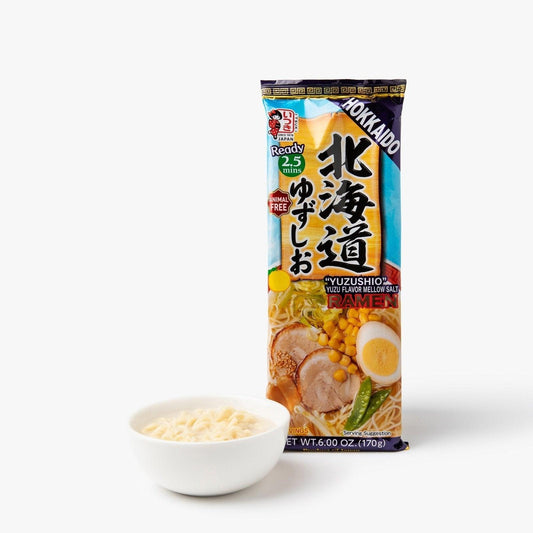

Ramen au yuzu vegan 2 portions ⋅ Itsuki Foods ⋅ 170g
⋅ Cuisson rapide⋅ Vegan⋅ Bouillon riche et original à base de et yuzu⋅ Ajouter du maïs et pousses de bambou pour un ramen authentique d'Hokkaido⋅ 2...
Prix habituel 5.65 €Prix promotionnel 5.65 € Prix habituelPrix unitaire 33.24 € par kg -


Cup ramen instantanés boeuf aux 5 épices ⋅ Nissin ⋅ 64g
⋅ Cuisson rapide⋅ Bouillon savoureux à base de cinq épices chinoises⋅ Produit par Nisshin, célèbre pour leur emblématique Cup noodles⋅ Parfait pour un repas de dernière...
Prix habituel 2.00 €Prix promotionnel 2.00 € Prix habituelPrix unitaire 31.25 € par kg -


Ramen instantané à la crevettes et la sauce soja ⋅ Nissin ⋅ 63g
⋅ Cuisson rapide⋅ Bouillon riche à la sauce soja et aux crevettesUn plat instantané rapide et pratique, préparé avec de la sauce soja et des crevettes....
Prix habituel 2.00 €Prix promotionnel 2.00 € Prix habituelPrix unitaire 31.75 € par kg -


Ramen instantanés au yuzu vegan 2 portions ⋅ Kurata Shokuhin ⋅ 236g
⋅ Cuisson rapide⋅ Nouilles faites à la main⋅ Vegan⋅ Bouillon umami de légumes et yuzu⋅ À personnaliser avec des épinards, shiitakés etcLes nouilles de ce ramen...
Prix habituel 4.90 €Prix promotionnel 4.90 € Prix habituelPrix unitaire 20.76 € par kg -

-


Ramen instantané poulet au gingembre ⋅ Nissin ⋅ 63g
⋅ Cuisson rapide⋅ Bouillon riche et parfumé à base de poulet au gingembre⋅ Idéal pour un repas de dernière minuteCes nouilles instantanées sont préparées avec du...
Prix habituel 2.00 €Prix promotionnel 2.00 € Prix habituelPrix unitaire 31.75 € par kg -


Ramen instantané au curry piquant ⋅ Nissin ⋅ 67g
⋅ Cuisson rapide⋅ Bouillon épicé à base de curry⋅ Idéal pour les repas de dernière minuteDes nouilles instantanées préparées avec un bouillon au curry. Elles sont...
Prix habituel 2.00 €Prix promotionnel 2.00 € Prix habituelPrix unitaire 29.85 € par kg


Cuisinez japonais avec nos dernières recettes


En savoir plus sur les produits d'épicerie japonais
Quels sont les ingrédients de base de la cuisine japonaise ?
Les ingrédients de base de la cuisine japonaise incluent :
- Riz (gohan) : L'élément central de la plupart des repas japonais.
- Soja : Utilisé sous forme de sauce soja, miso, ou tofu.
- Algues (nori, kombu, wakame) : Essentielles dans les soupes et les sushis.
- Dashi : Un bouillon de base fait de kombu (algue) et de bonite séchée.
- Mirin : Un vin de riz doux utilisé pour la cuisine.
- Vinaigre de riz : Indispensable pour assaisonner le riz à sushi et les marinades.
- Wasabi : Un condiment piquant, souvent servi avec des sushis.
Quelle est la différence entre le mirin et le saké de cuisine ?
Le mirin et le saké de cuisine sont tous deux utilisés pour cuisiner, mais ils diffèrent principalement par leur teneur en sucre et en alcool. Le mirin est un vin de riz doux, sucré et peu alcoolisé, utilisé pour ajouter de la douceur et de la brillance aux plats. Le saké de cuisine est plus sec, avec une teneur en alcool plus élevée, et sert à déglacer les plats et à neutraliser les odeurs de poisson ou de viande.
Quels sont les types de nouilles japonaises les plus courants ?
Les types de nouilles japonaises les plus courants sont :
- Ramen : Nouilles de blé servies dans un bouillon chaud, très populaire au Japon.
- Udon : Nouilles épaisses de blé, servies en soupe ou sautées, souvent dans un bouillon léger.
- Soba : Nouilles fines de sarrasin, servies chaudes en soupe ou froides avec une sauce d'accompagnement.
- Somen : Nouilles de blé très fines, généralement servies froides en été.
Comment utiliser le dashi dans mes recettes ?
Le dashi est un bouillon de base dans la cuisine japonaise, utilisé pour préparer des soupes, comme la soupe miso, des sauces, et des plats mijotés. Il peut également être utilisé pour cuire des légumes, comme dans l'oden, ou comme base pour les plats de nouilles. Pour l'utiliser, il suffit de diluer le dashi (qu'il soit en granules, liquide ou fait maison) avec de l'eau, puis de l'incorporer dans tes recettes.
Quelle est la différence entre le miso blanc et le miso rouge ?
Le miso blanc (shiro miso) et le miso rouge (aka miso) se distinguent par leur couleur, leur goût et leur durée de fermentation :
- Miso blanc : Plus doux, légèrement sucré, avec une fermentation plus courte, souvent utilisé pour des plats légers comme les soupes.
- Miso rouge : Plus fort en goût, salé, et avec une fermentation plus longue, utilisé dans des plats plus robustes comme les soupes miso riches ou les marinades.
Comment choisir le bon type de vinaigre de riz ?
Pour choisir le bon vinaigre de riz, prends en compte :
- Vinaigre de riz blanc : Doux et polyvalent, idéal pour les sushis, les marinades et les vinaigrettes.
- Vinaigre de riz assaisonné : Déjà sucré et salé, prêt à l'emploi pour le riz à sushi.
- Vinaigre de riz brun : Plus intense en goût, souvent utilisé pour des plats plus riches ou des marinades plus complexes.
Quels sont les accompagnements typiques des sushis ?
Les accompagnements typiques des sushis incluent :
- Wasabi : Pâte piquante faite à partir de racine de wasabi, ajoutée directement sur le sushi ou mélangée à la sauce soja.
- Gingembre mariné (gari) : Fines tranches de gingembre marinées, consommées entre les bouchées pour rafraîchir le palais.
- Sauce soja : Utilisée pour tremper légèrement le sushi avant de le manger.
- Shiso : Feuille de pérille, parfois servie avec le sushi pour ajouter une note herbacée.
Quelles sont les bases de la cuisine japonaise ?
Les bases de la cuisine japonaise reposent sur l'utilisation d'ingrédients frais et d'assaisonnements essentiels comme la sauce soja, le miso, le mirin, le vinaigre de riz et le dashi. La cuisson des aliments est souvent simple, mettant en valeur la pureté et le goût naturel des ingrédients. Les techniques courantes incluent la cuisson à la vapeur, le grillage, la friture légère (tempura), et la préparation de plats crus comme les sushis et sashimis.
Comment préparer un bento équilibré ?
Un bento équilibré comprend :
- Protéines : Poisson, viande, tofu ou œuf.
- Riz : L'ingrédient principal, souvent accompagné de graines de sésame ou de furikake (assaisonnement pour riz).
- Légumes : Crus, marinés (tsukemono), ou cuits (comme le brocoli, les carottes).
- Fruits : Des morceaux de fruits frais pour finir le repas.
- Accompagnements : Comme le tamagoyaki (omelette japonaise), les boulettes de riz (onigiri) ou des petites salades.
Quels sont les bienfaits de la cuisine japonaise ?
La gastronomie japonaise est reconnue pour ses nombreux bienfaits pour la santé en raison de ses ingrédients frais, de ses techniques de cuisson saines et de son équilibre nutritionnel. Les Japonais ont l'une des espérances de vie les plus élevées au monde, et plusieurs facteurs contribuent à cette longévité remarquable dont leurs habitudes alimentaires !
Ils ont traditionnellement suivi un régime alimentaire équilibré, riche en légumes, en poissons, en algues, en tofu et en céréales, notamment le riz. Leur régime est pauvre en graisses saturées et en aliments transformés. Leur régime n’est pas trop calorique, tout en étant bourrés de nutriments essentiels ainsi que d’antioxydants, ce qui aide à lutter contre le stress oxydatif, faciliter la digestion prévenir le vieillissement cellulaire.
Les Japonais ont une consommation élevée de poissons gras, qui sont une excellente source d'oméga-3, bénéfique à la santé cardiaque et cérébrale.
La base de nombreux plats japonais est le riz, qui est une source d'énergie saine, pauvre en graisses saturées et riche en glucides complexes.
Les assiettes japonaises sont souvent garnies de légumes frais, riches en vitamines, minéraux et fibres alimentaires, ce qui favorise la santé digestive et la vitalité. On y trouve aussi des algues telles que le nori, le kombu et le wakame sont riches en nutriments, notamment en iode, en vitamines et en minéraux essentiels.
Aussi, les produits à base de soja comme le tofu, le miso et le tempeh sont une excellente source de protéines végétales, de fibres et d'antioxydants.
De plus, les Japonais consomment au quotidien des aliments fermentés tels que le miso et le nattō, qui sont bénéfiques pour la santé digestive grâce aux probiotiques qu'ils contiennent.
Les techniques de cuisson japonaises ont également leur rôle à jouer ! Par exemple, le grillage (yakitori) et la cuisson à la vapeur (nimono), préservent la saveur et la valeur nutritive des aliments.
Il convient de noter que la cuisine japonaise varie en fonction des préférences régionales et individuelles, de sorte que les bienfaits spécifiques pour la santé peuvent varier en fonction des choix alimentaires personnels. Cependant, de manière générale, la gastronomie japonaise est vue et reconnue pour sa contribution à une alimentation saine, équilibrée et nutritive.
Qu'est ce que l'umami ?
L'umami est l'une des cinq saveurs de base que les papilles gustatives humaines peuvent détecter, aux côtés du sucré, du salé, de l'acide et de l'amer. Le terme "umami" est d'origine japonaise et se traduit approximativement par "savoureux" ou "délicieux". Cette saveur a une qualité gustative distincte et est souvent décrite comme une sensation de "riche", "profonde" ou "savoureuse" en bouche.
L'umami est généralement associé à des aliments riches en acide glutamique, un acide aminé qui agit comme un neurotransmetteur dans le cerveau humain. Les aliments riches en umami incluent :
Le glutamate monosodique (MSG) : Un additif alimentaire couramment utilisé pour rehausser la saveur umami dans de nombreux plats.
Les produits à base de soja : Comme le miso, la sauce soja et le tofu, qui sont riches en acide glutamique naturel.
Les aliments fermentés : Comme le fromage parmesan, le Roquefort, le kimchi, et les produits de la fermentation tels que la sauce Worcestershire.
Les viandes cuites lentement : Comme le rôti de bœuf, le porc effiloché et d'autres plats mijotés qui développent des saveurs umami au fil du temps.
Les champignons : Comme les champignons shiitake et les champignons porcini, qui contiennent naturellement de l'acide glutamique.
Les tomates : En particulier la tomate mûre, qui est riche en acide glutamique et vue comme un pilier de la saveur umami dans la cuisine italienne par exemple.
L'umami a une capacité unique à améliorer et à équilibrer les saveurs dans les plats, en particulier en ajoutant de la profondeur et de la complexité aux préparations culinaires. Il est souvent utilisé en combinaison avec d'autres saveurs de base pour créer des plats délicieusement équilibrés. Cette saveur a été reconnue comme une saveur distincte au cours du 20e siècle et est maintenant largement acceptée dans le monde entier comme un élément essentiel de la palette gustative humaine.


